
أعمدة استعادة الكوارث وأنظمة النسخ الاحتياطي
ضمان حماية البيانات، واستعادة سريعة، واستمرارية الأعمال خلال فشل الأنظمة والاضطرابات.
نسخ احتياطي وحماية البيانات
تساعد النسخ الاحتياطية المنتظمة والآمنة في حماية البيانات الحيوية من الفقدان بسبب الأعطال أو التهديدات الإلكترونية أو الأخطاء البشرية، مما يضمن استعادة سريعة وموثوقة عند الحاجة.
استعادة الكوارث والاستعادة السريعة
تمكن خطط الاستعادة المحددة جيدًا من استعادة النظام بسرعة مع الحد الأدنى من التوقف، مما يساعد الشركات على استئناف العمليات بسرعة بعد الاضطرابات.
التوافر العالي ومرونة النظام
تضمن الأنظمة الاحتياطية والمراقبة المستمرة أن تظل المنصات متاحة ومستقرة، حتى خلال الأعطال غير المتوقعة أو حالات الطلب العالي.
أشياء يجب معرفتها عن

Disaster Recovery استعادة الأنظمة
Restore systems quickly after failures. استعادة الأنظمة بسرعة بعد الأعطال.

Data Backup النسخ الاحتياطي للبيانات
Secure data with regular backup systems. حماية البيانات من خلال النسخ الاحتياطي المنتظم.

Quick Restoration الاستعادة السريعة
Recover systems rapidly after disruptions. استرجاع الأنظمة بسرعة بعد الانقطاعات.

Risk Reduction تقليل المخاطر
Reduce impact of unexpected system failures. تقليل تأثير الأعطال غير المتوقعة.

System Resilience مرونة النظام
Strengthen systems for stable operations. تعزيز الأنظمة لضمان استقرار التشغيل.

Business Continuity استمرارية الأعمال
Maintain services during disruptions. الحفاظ على الخدمات أثناء الانقطاعات.
Disaster Recovery استعادة الأنظمة
Restore systems quickly after failures. استعادة الأنظمة بسرعة بعد الأعطال.
Data Backup النسخ الاحتياطي للبيانات
Secure data with regular backup systems. حماية البيانات من خلال النسخ الاحتياطي المنتظم.
Quick Restoration الاستعادة السريعة
Recover systems rapidly after disruptions. استرجاع الأنظمة بسرعة بعد الانقطاعات.
Risk Reduction تقليل المخاطر
Reduce impact of unexpected system failures. تقليل تأثير الأعطال غير المتوقعة.
System Resilience مرونة النظام
Strengthen systems for stable operations. تعزيز الأنظمة لضمان استقرار التشغيل.
Business Continuity استمرارية الأعمال
Maintain services during disruptions. الحفاظ على الخدمات أثناء الانقطاعات.
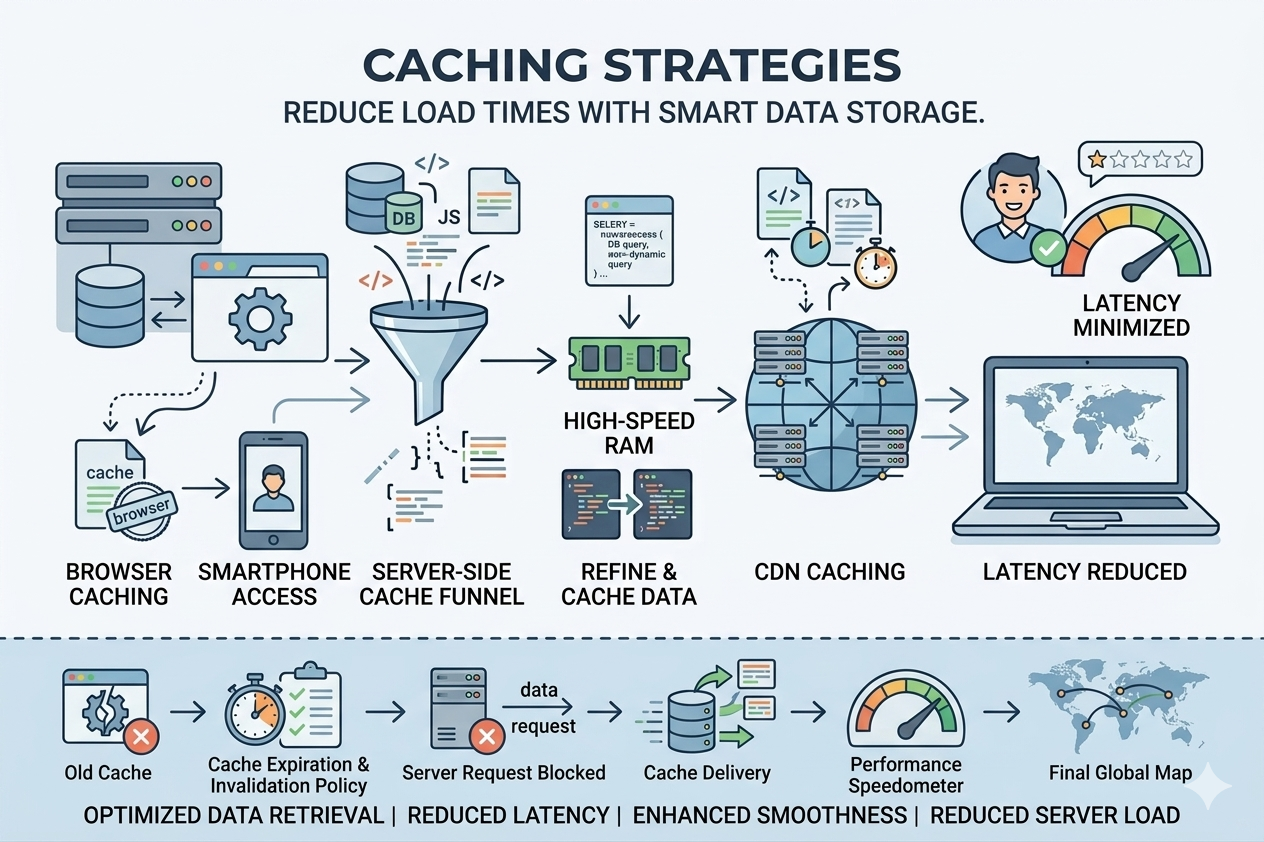
استراتيجيات التخزين المؤقت
تقليل أوقات التحميل من خلال تخزين البيانات الذكي.
تلعب التخزين المؤقت دورًا حاسمًا في تحسين سرعة الموقع من خلال تخزين البيانات التي يتم الوصول إليها بشكل متكرر مؤقتًا، بحيث يمكن تسليمها بشكل أسرع للمستخدمين. تقلل تقنيات مثل التخزين المؤقت للمتصفح، والتخزين المؤقت على جانب الخادم، وتخزين شبكة توصيل المحتوى (CDN) من الحاجة إلى جلب البيانات بشكل متكرر من الخادم الأصلي. من خلال تقليل طلبات الخادم وتحسين استرجاع البيانات، يعزز التخزين المؤقت الأداء بشكل كبير، ويقلل من زمن الانتظار، ويضمن تجربة تصفح أكثر سلاسة. إدارة التخزين المؤقت بشكل صحيح، بما في ذلك إبطال التخزين المؤقت وسياسات انتهاء الصلاحية، أمر ضروري للحفاظ على تحديث المحتوى مع الحفاظ على السرعة.
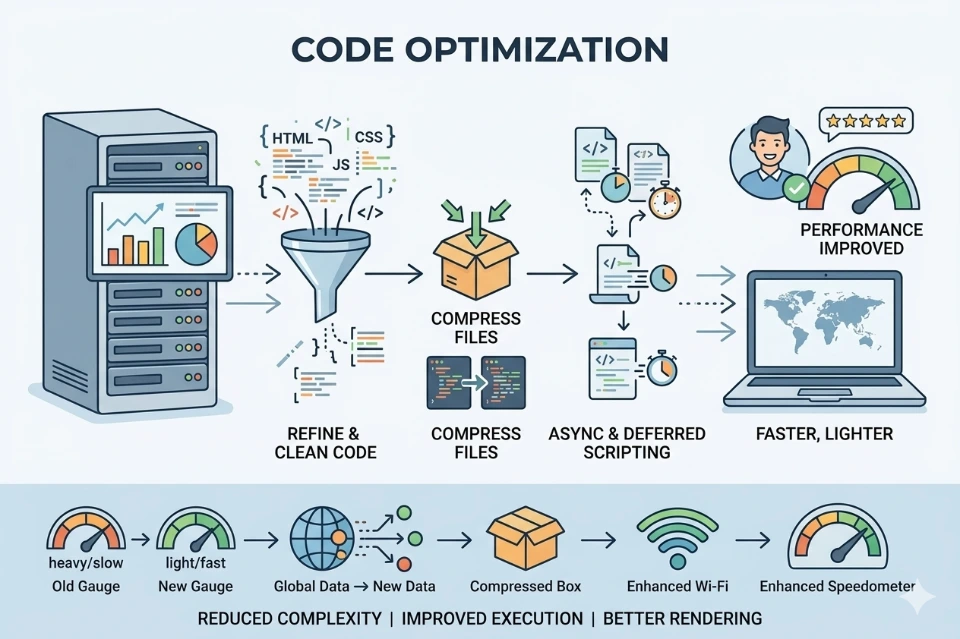
تحسين الشيفرة
اجعل الشيفرة أخف وأسرع.
يتضمن تحسين الشيفرة تنقيح HTML وCSS وJavaScript لتقليل التعقيد غير الضروري وتحسين سرعة التنفيذ. يشمل ذلك إزالة الشيفرة غير المستخدمة، وتقليل أحجام الملفات من خلال الضغط والتقليل، وتحسين السكربتات لتحميلها بكفاءة. الشيفرة النظيفة والمهيكلة بشكل جيد لا تحسن الأداء فحسب، بل تعزز أيضًا القابلية للصيانة وقابلية التوسع. تساعد تقنيات مثل التحميل غير المتزامن، والسكربتات المؤجلة، وممارسات البرمجة المودولية في ضمان أن صفحات الويب تُعرض بسرعة وتعمل بسلاسة عبر جميع البيئات.
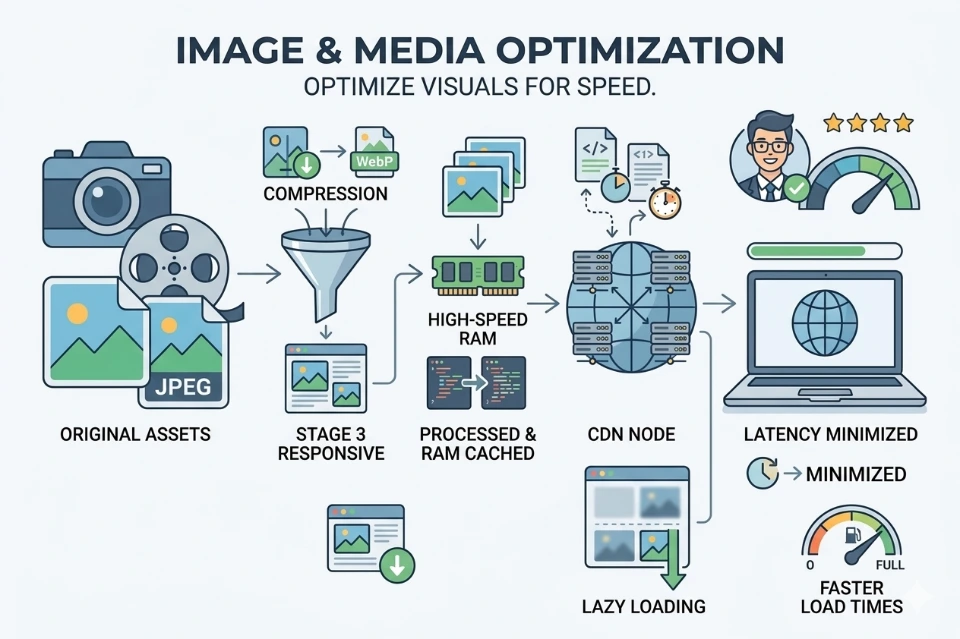
تحسين الصور والوسائط
قم بتحسين المرئيات للسرعة.
غالبًا ما تمثل الصور وملفات الوسائط الجزء الأكبر من وقت تحميل صفحة الويب. يتضمن تحسين هذه الأصول ضغط الصور، واستخدام تنسيقات حديثة مثل WebP، وتنفيذ صور استجابة تتكيف مع أحجام الشاشات المختلفة. يضمن التحميل الكسول تحميل الصور فقط عندما تدخل في عرض المستخدم، مما يقلل من وقت التحميل الأولي. يحافظ تحسين الوسائط بشكل صحيح على الجودة البصرية بينما يحسن الأداء بشكل كبير، مما يضمن للمستخدمين تجربة سريعة وجذابة بصريًا.
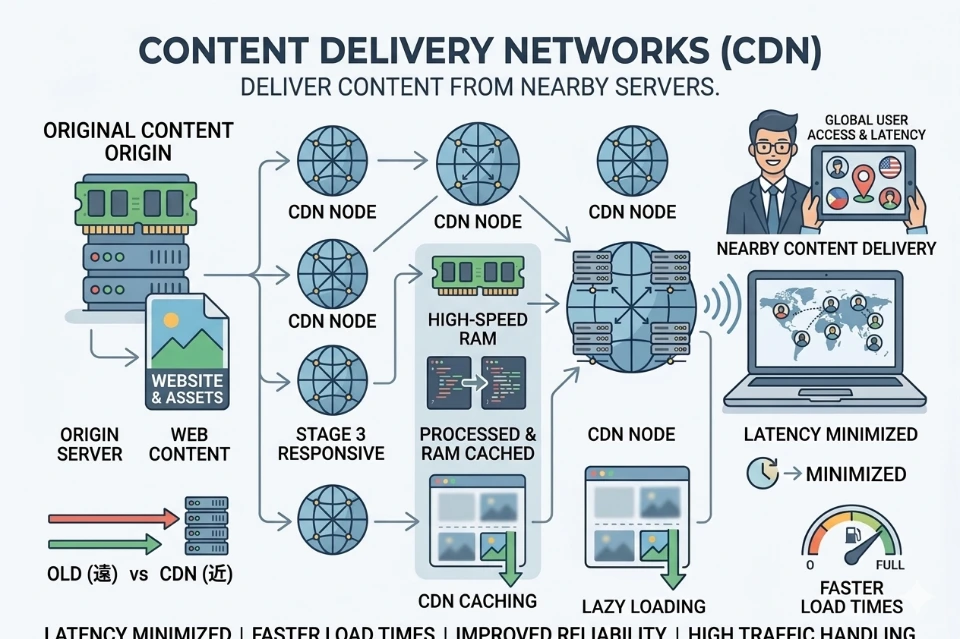
شبكات توصيل المحتوى (CDN)
توصيل المحتوى من الخوادم القريبة.
تحسن شبكة توصيل المحتوى (CDN) أداء الموقع الإلكتروني من خلال توزيع المحتوى عبر عدة خوادم تقع في مواقع جغرافية مختلفة. عندما يصل المستخدمون إلى موقع ويب، يتم توصيل المحتوى من أقرب خادم، مما يقلل من زمن الانتظار ويحسن سرعة التحميل. تساعد شبكات توصيل المحتوى أيضًا في التعامل مع أحجام المرور العالية، وتقليل الحمل على الخادم، وتحسين الاعتمادية من خلال توفير النسخ الاحتياطية. يضمن ذلك أداءً متسقًا بغض النظر عن موقع المستخدم، مما يجعلها ضرورية للمواقع العالمية التي تهدف إلى تقديم تجارب سريعة وسلسة.
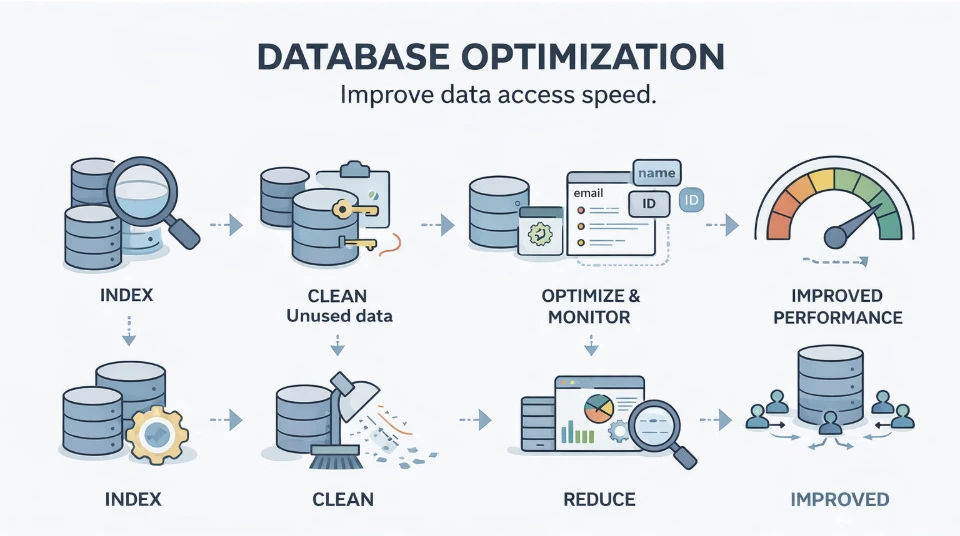
تحسين قاعدة البيانات
تحسين سرعة الوصول إلى البيانات.
إدارة قاعدة البيانات بكفاءة أمر ضروري للحفاظ على أداء سريع للموقع الإلكتروني، خاصةً للمواقع الديناميكية والتطبيقات. يتضمن تحسين قاعدة البيانات فهرسة الحقول التي يتم الاستعلام عنها بشكل متكرر، وتقليل البيانات الزائدة، وتحسين الاستعلامات لتقليل وقت المعالجة. تساعد مهام الصيانة الدورية مثل تنظيف البيانات غير المستخدمة، وتحديث الفهارس، ومراقبة أداء الاستعلامات في ضمان تشغيل قاعدة البيانات بكفاءة. تقلل قاعدة البيانات المحسّنة جيدًا من أوقات الاستجابة، وتحسن قابلية التوسع، وتدعم التفاعلات السلسة حتى تحت الحمل الثقيل.
System Resilience
مرونة النظام
High Availability & Redundancy
التوفر العالي والتكرار
Continuous Availability
التوفر المستمر
Designing systems that minimize downtime and maintain continuous operation, ensuring your applications remain accessible during unexpected failures.
تصميم أنظمة تقلل من وقت التوقف وتحافظ على التشغيل المستمر، مما يضمن بقاء تطبيقاتك متاحة أثناء الإخفاقات غير المتوقعة.
Component Redundancy
تكرار المكونات
Duplicating essential servers, databases, and network resources so backup systems can immediately take over without affecting end users.
مضاعفة الخوادم وقواعد البيانات وموارد الشبكة الأساسية بحيث يمكن لأنظمة النسخ الاحتياطي تولي العمل فوراً دون التأثير على المستخدمين.
Mission-Critical Stability
استقرار المهام الحرجة
Enhancing reliability for e-commerce and financial platforms where even brief outages can lead to significant losses, building long-term user trust.
تعزيز الموثوقية لمنصات التجارة الإلكترونية والمنصات المالية حيث يمكن أن تؤدي فترات الانقطاع القصيرة إلى خسائر كبيرة، مما يبني ثقة المستخدم على المدى الطويل.
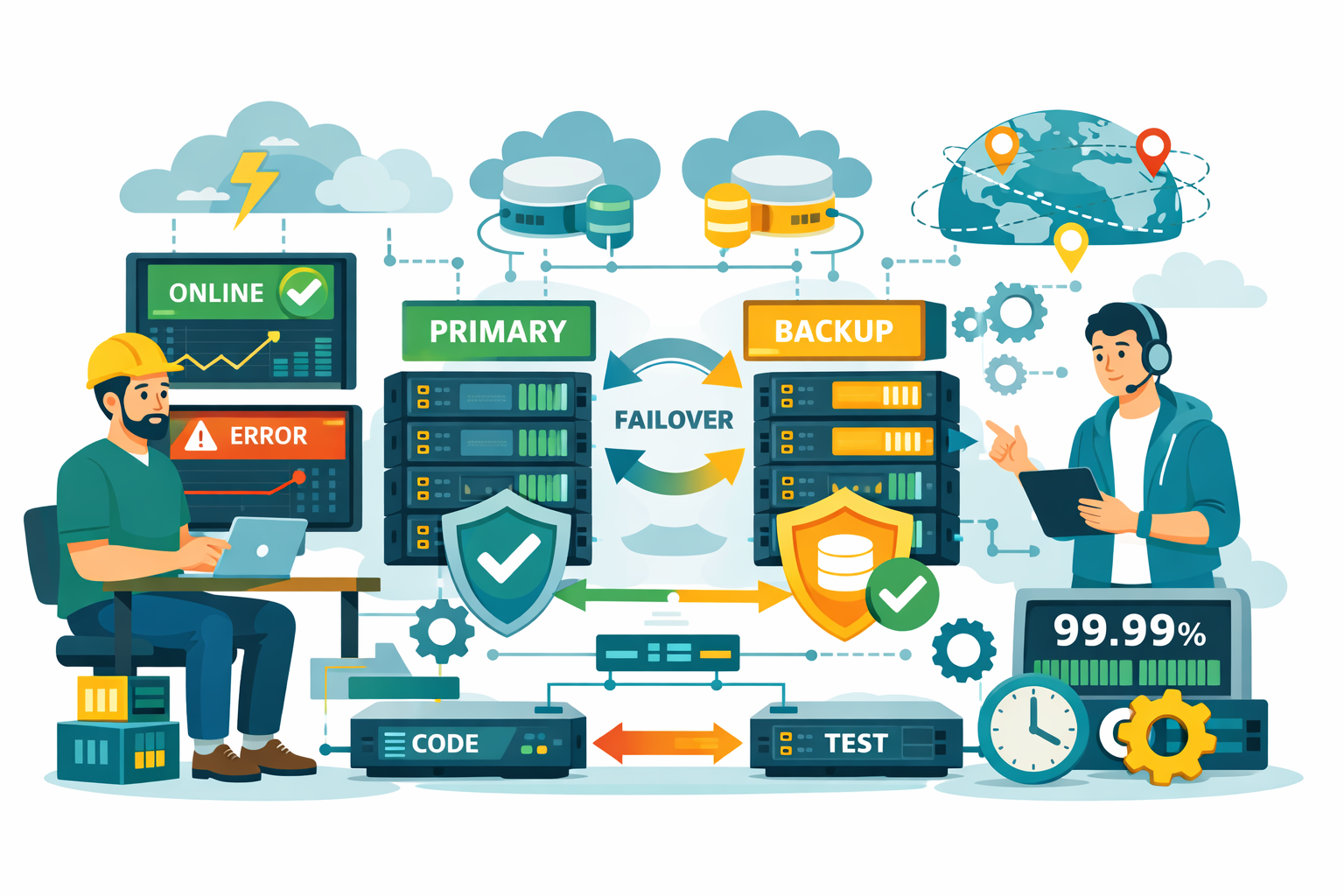
System Resilience
مرونة النظام
High Availability & Redundancy
التوفر العالي والتكرار
Continuous Availability
التوفر المستمر
Designing systems that minimize downtime and maintain continuous operation, ensuring your applications remain accessible during unexpected failures.
تصميم أنظمة تقلل من وقت التوقف وتحافظ على التشغيل المستمر، مما يضمن بقاء تطبيقاتك متاحة أثناء الإخفاقات غير المتوقعة.
Component Redundancy
تكرار المكونات
Duplicating essential servers, databases, and network resources so backup systems can immediately take over without affecting end users.
مضاعفة الخوادم وقواعد البيانات وموارد الشبكة الأساسية بحيث يمكن لأنظمة النسخ الاحتياطي تولي العمل فوراً دون التأثير على المستخدمين.
Mission-Critical Stability
استقرار المهام الحرجة
Enhancing reliability for e-commerce and financial platforms where even brief outages can lead to significant losses, building long-term user trust.
تعزيز الموثوقية لمنصات التجارة الإلكترونية والمنصات المالية حيث يمكن أن تؤدي فترات الانقطاع القصيرة إلى خسائر كبيرة، مما يبني ثقة المستخدم على المدى الطويل.
Reliability Assurance
ضمان الموثوقية
Continuous Testing & Monitoring
الاختبار والمراقبة المستمرة
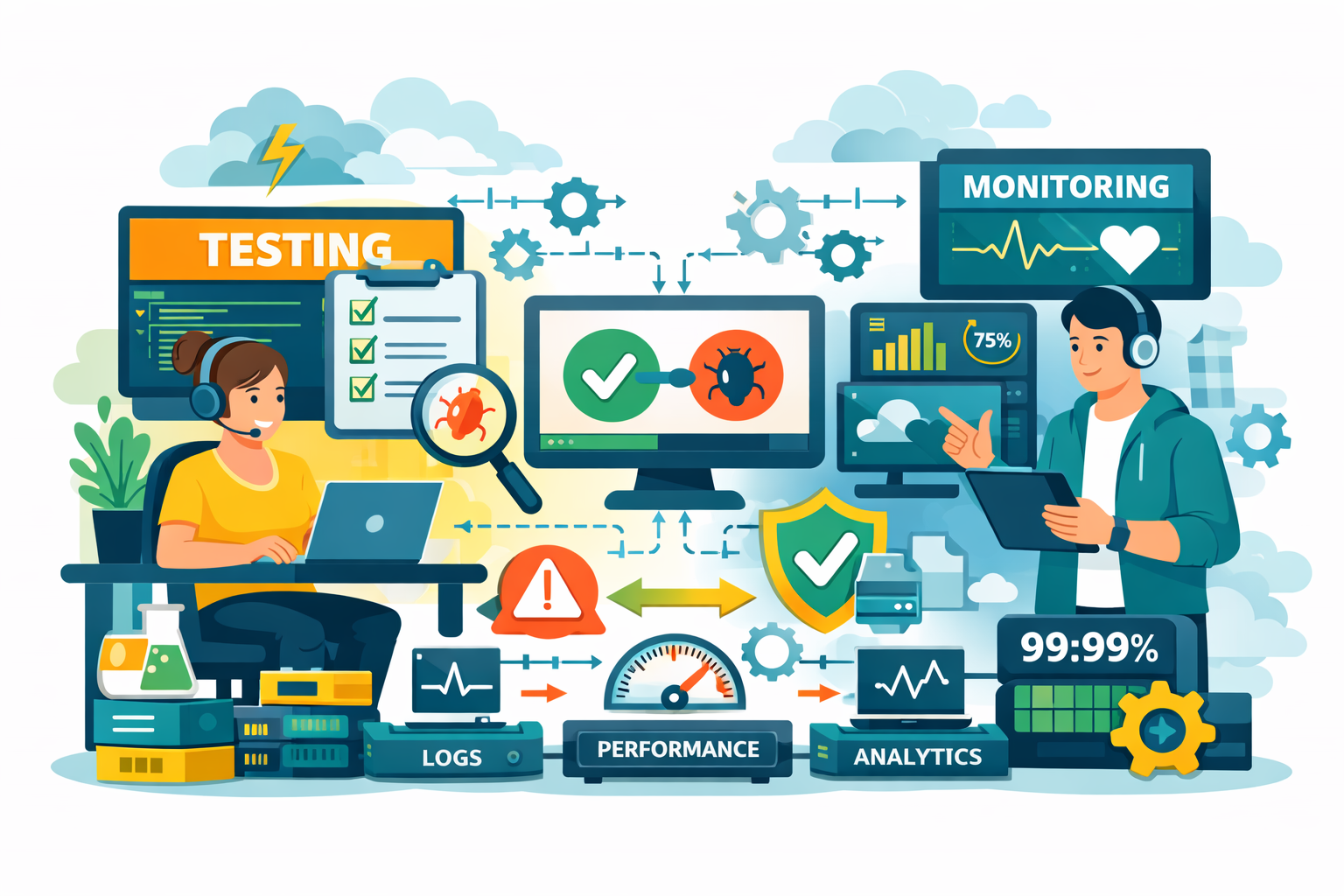
Recovery Validation
التحقق من الاسترداد
Conducting periodic recovery tests to simulate real-world failure scenarios, ensuring data can be restored quickly and accurately when needed.
إجراء اختبارات استرداد دورية لمحاكاة سيناريوهات الفشل في العالم الحقيقي، مما يضمن إمكانية استعادة البيانات بسرعة وبدقة عند الحاجة.
Proactive Performance Tracking
تتبع الأداء الاستباقي
Monitoring tools continuously track system performance and backup success rates, identifying potential risks before they escalate into major issues.
تتتبع أدوات المراقبة باستمرار أداء النظام ومعدلات نجاح النسخ الاحتياطي، مما يحدد المخاطر المحتملة قبل أن تتفاقم إلى مشاكل رئيسية.
Integrity & Compliance
النزاهة والامتثال
Verifying data integrity to confirm restored information is usable, while regularly updating procedures to align with evolving infrastructure.
التحقق من سلامة البيانات للتأكد من أن المعلومات المستعادة صالحة للاستخدام، مع تحديث الإجراءات بانتظام لتتماشى مع البنية التحتية المتطورة.
Reliability Assurance
ضمان الموثوقية
Continuous Testing & Monitoring
الاختبار والمراقبة المستمرة
Recovery Validation
التحقق من الاسترداد
Conducting periodic recovery tests to simulate real-world failure scenarios, ensuring data can be restored quickly and accurately when needed.
إجراء اختبارات استرداد دورية لمحاكاة سيناريوهات الفشل في العالم الحقيقي، مما يضمن إمكانية استعادة البيانات بسرعة وبدقة عند الحاجة.
Proactive Performance Tracking
تتبع الأداء الاستباقي
Monitoring tools continuously track system performance and backup success rates, identifying potential risks before they escalate into major issues.
تتتبع أدوات المراقبة باستمرار أداء النظام ومعدلات نجاح النسخ الاحتياطي، مما يحدد المخاطر المحتملة قبل أن تتفاقم إلى مشاكل رئيسية.
Integrity & Compliance
النزاهة والامتثال
Verifying data integrity to confirm restored information is usable, while regularly updating procedures to align with evolving infrastructure.
التحقق من سلامة البيانات للتأكد من أن المعلومات المستعادة صالحة للاستخدام، مع تحديث الإجراءات بانتظام لتتماشى مع البنية التحتية المتطورة.
ما يمكننا القيام به من أجلك
نقوم بإعداد أنظمة نسخ احتياطي آمنة لحماية بياناتك من الفقدان أو الأعطال أو التهديدات السيبرانية.
نقوم بتكوين نسخ احتياطية مجدولة وآلية لضمان حماية البيانات المستمرة.
نقوم بتخزين النسخ الاحتياطية بشكل آمن عبر مواقع متعددة لضمان أقصى درجات الموثوقية والأمان.
نقوم بتنفيذ نسخ احتياطية كاملة وتزايدية وقائمة على السحابة بما يتناسب مع احتياجات عملك.
نضع خطط استعادة منظمة لإعادة تشغيل الأنظمة بسرعة بعد الانقطاعات.
نضمن استعادة سريعة من خلال استراتيجيات محددة لـ RTO وRPO لتقليل وقت التوقف إلى الحد الأدنى.

تواصل معنا اليوم!
شركتي
- مبنى غرهود فيوز - الطابق السابع - المكتب 711-01 دبي، الإمارات العربية المتحدة
- +971509862203
- +971509862239
- info@itdtech.ae