
Pillars of Disaster Recovery & Backup Systems
Ensure data protection, fast recovery, and business continuity during system failures and disruptions.
Data Backup & Protection
Regular, secure backups safeguard critical data from loss due to failures, cyber threats, or human error, ensuring quick and reliable restoration when needed.
Disaster Recovery & Rapid Restoration
Well-defined recovery plans enable fast system restoration with minimal downtime, helping businesses resume operations quickly after disruptions.
High Availability & System Resilience
Redundant systems and continuous monitoring ensure platforms remain accessible and stable, even during unexpected failures or high-demand situations.
Things To Know About

Disaster Recovery استعادة الأنظمة
Restore systems quickly after failures. استعادة الأنظمة بسرعة بعد الأعطال.

Data Backup النسخ الاحتياطي للبيانات
Secure data with regular backup systems. حماية البيانات من خلال النسخ الاحتياطي المنتظم.

Quick Restoration الاستعادة السريعة
Recover systems rapidly after disruptions. استرجاع الأنظمة بسرعة بعد الانقطاعات.

Risk Reduction تقليل المخاطر
Reduce impact of unexpected system failures. تقليل تأثير الأعطال غير المتوقعة.

System Resilience مرونة النظام
Strengthen systems for stable operations. تعزيز الأنظمة لضمان استقرار التشغيل.

Business Continuity استمرارية الأعمال
Maintain services during disruptions. الحفاظ على الخدمات أثناء الانقطاعات.
Disaster Recovery استعادة الأنظمة
Restore systems quickly after failures. استعادة الأنظمة بسرعة بعد الأعطال.
Data Backup النسخ الاحتياطي للبيانات
Secure data with regular backup systems. حماية البيانات من خلال النسخ الاحتياطي المنتظم.
Quick Restoration الاستعادة السريعة
Recover systems rapidly after disruptions. استرجاع الأنظمة بسرعة بعد الانقطاعات.
Risk Reduction تقليل المخاطر
Reduce impact of unexpected system failures. تقليل تأثير الأعطال غير المتوقعة.
System Resilience مرونة النظام
Strengthen systems for stable operations. تعزيز الأنظمة لضمان استقرار التشغيل.
Business Continuity استمرارية الأعمال
Maintain services during disruptions. الحفاظ على الخدمات أثناء الانقطاعات.
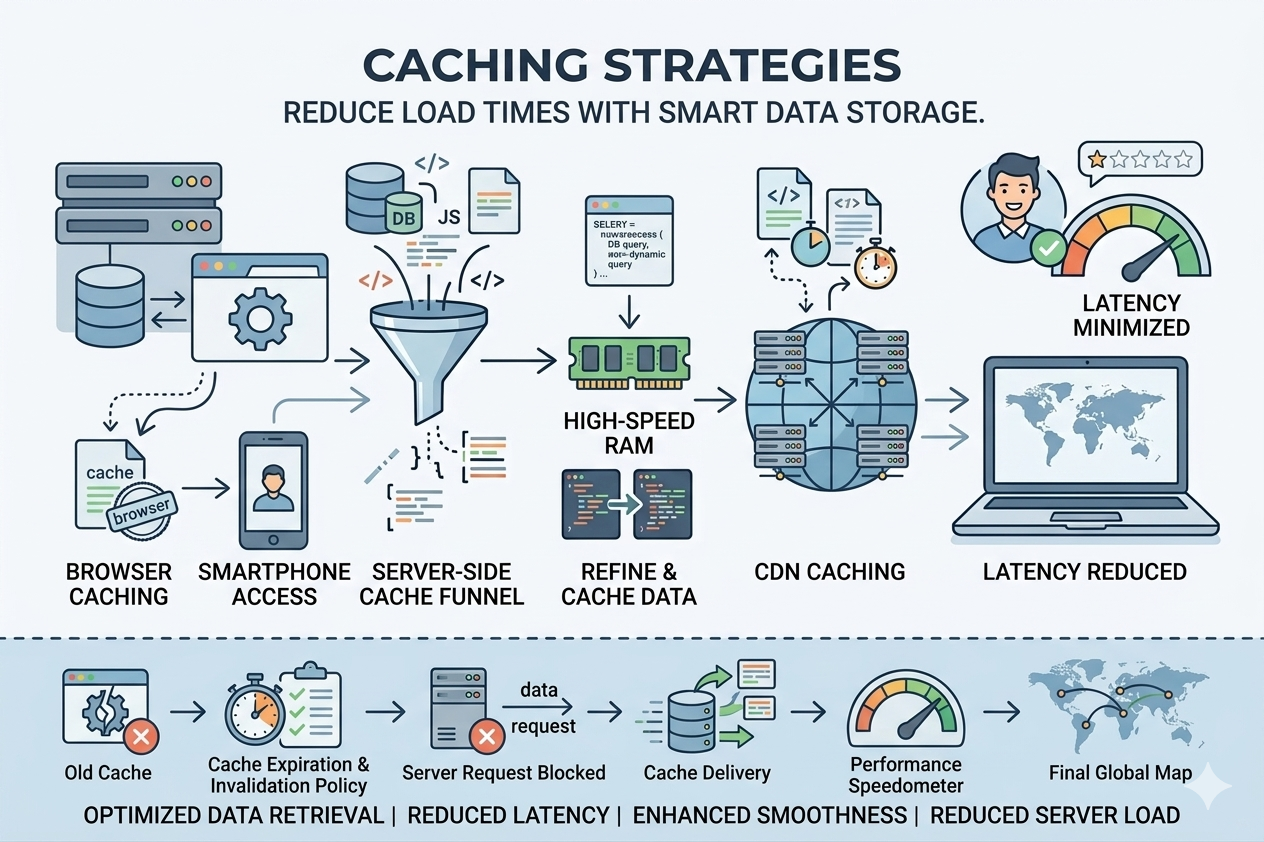
Caching Strategies
Reduce load times with smart data storage.
Caching plays a critical role in improving website speed by temporarily storing frequently accessed data so it can be delivered faster to users. Techniques such as browser caching, server-side caching, and Content Delivery Network (CDN) caching reduce the need to repeatedly fetch data from the origin server. By minimizing server requests and optimizing data retrieval, caching significantly enhances performance, reduces latency, and ensures a smoother browsing experience. Proper cache management, including cache invalidation and expiration policies, is essential to keep content up-to-date while maintaining speed.
Code Optimization
Make code lighter and faster.
Optimizing code involves refining HTML, CSS, and JavaScript to reduce unnecessary complexity and improve execution speed. This includes removing unused code, minimizing file sizes through compression and minification, and optimizing scripts to load efficiently. Clean and well-structured code not only improves performance but also enhances maintainability and scalability. Techniques such as asynchronous loading, deferred scripts, and modular coding practices help ensure that web pages render quickly and function smoothly across all environments.
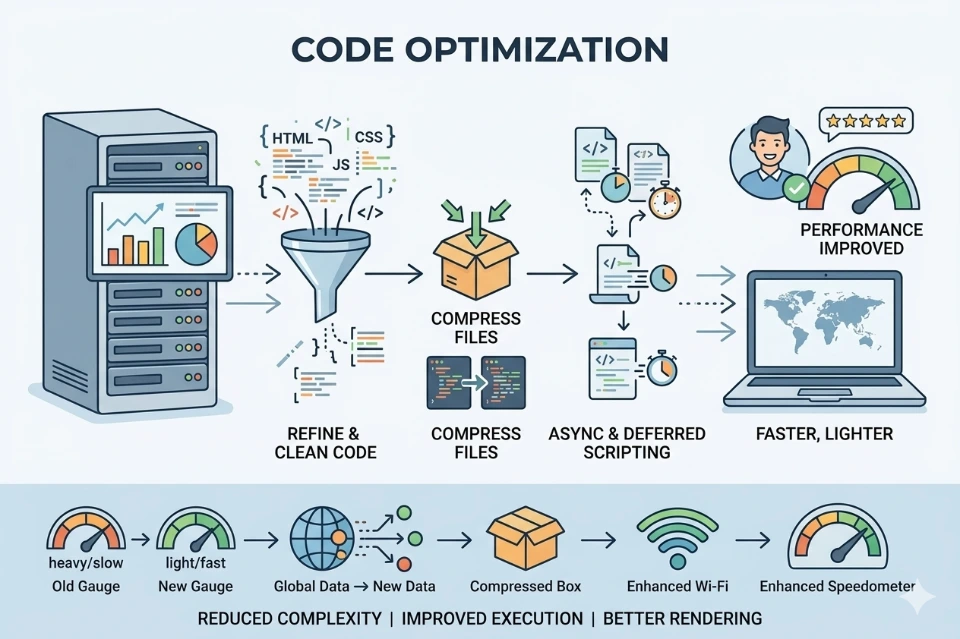
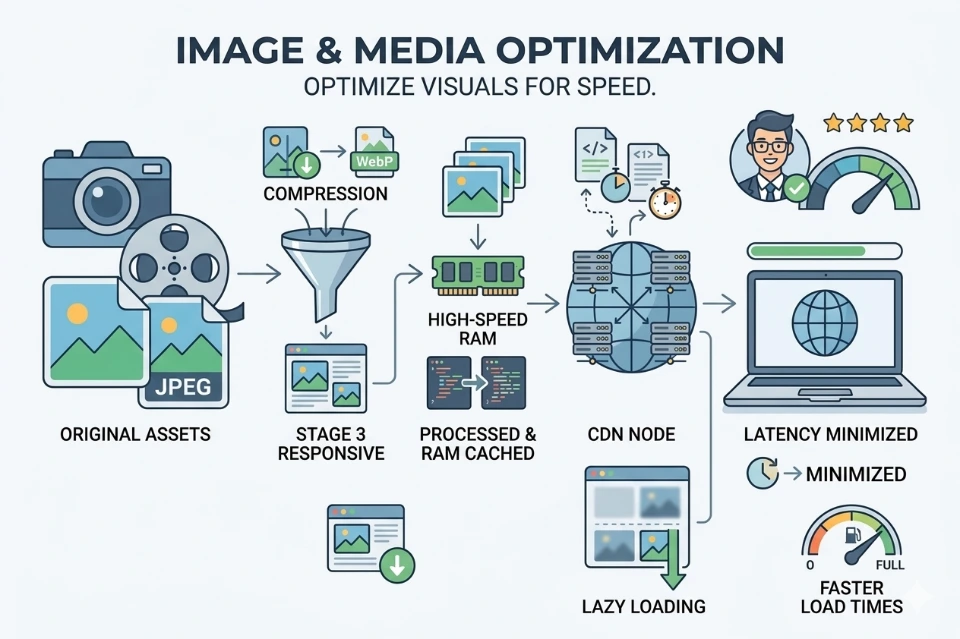
Image & Media Optimization
Optimize visuals for speed.
Images and media files often account for the largest portion of a webpage’s load time. Optimizing these assets involves compressing images, using modern formats like WebP, and implementing responsive images that adapt to different screen sizes. Lazy loading ensures that images are only loaded when they enter the user’s viewport, reducing initial load time. Proper media optimization maintains visual quality while significantly improving performance, ensuring users get a fast yet visually engaging experience.
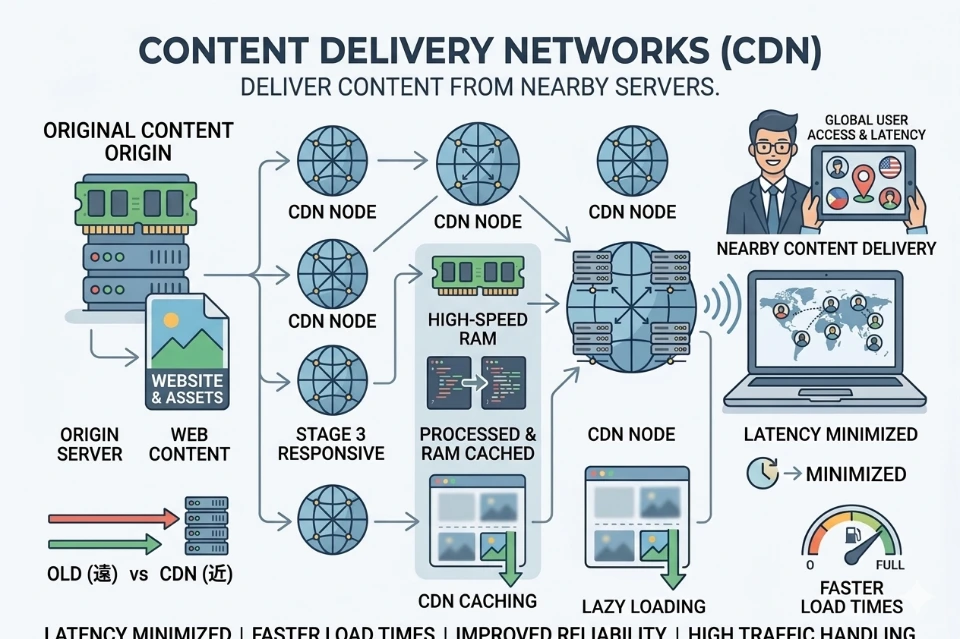
Content Delivery Networks (CDN)
Deliver content from nearby servers.
A Content Delivery Network (CDN) improves website performance by distributing content across multiple geographically located servers. When users access a website, content is delivered from the nearest server, reducing latency and improving load speed. CDNs also help handle high traffic volumes, reduce server load, and improve reliability by providing redundancy. This ensures consistent performance regardless of user location, making it essential for global websites aiming to deliver fast and seamless experiences.
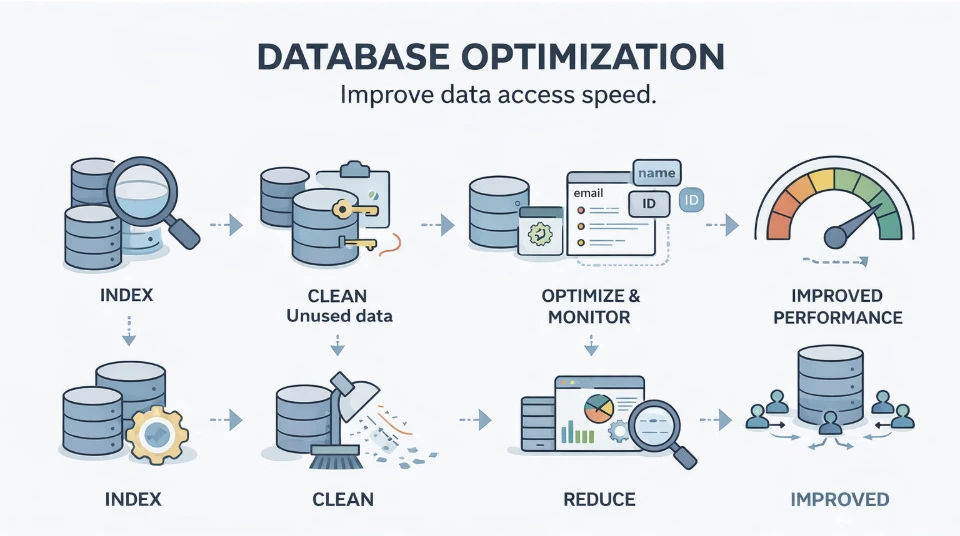
Database Optimization
Improve data access speed.
Efficient database management is essential for maintaining fast website performance, especially for dynamic websites and applications. Database optimization involves indexing frequently queried fields, reducing redundant data, and optimizing queries to minimize processing time. Regular maintenance tasks such as cleaning unused data, updating indexes, and monitoring query performance help ensure that the database operates efficiently. A well-optimized database reduces response times, improves scalability, and supports smooth interactions even under heavy load.
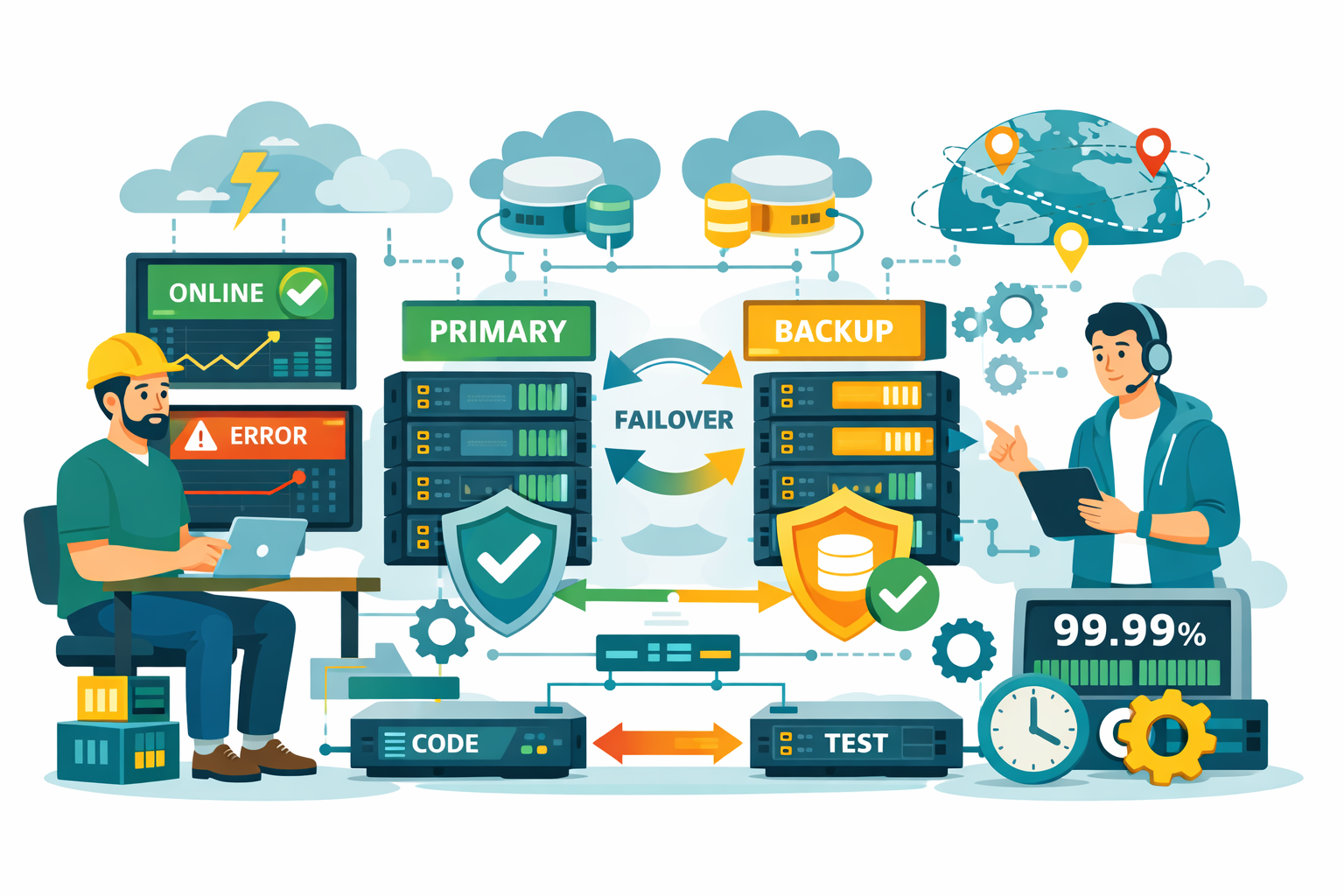
System Resilience
مرونة النظام
High Availability & Redundancy
التوفر العالي والتكرار
Continuous Availability
التوفر المستمر
Designing systems that minimize downtime and maintain continuous operation, ensuring your applications remain accessible during unexpected failures.
تصميم أنظمة تقلل من وقت التوقف وتحافظ على التشغيل المستمر، مما يضمن بقاء تطبيقاتك متاحة أثناء الإخفاقات غير المتوقعة.
Component Redundancy
تكرار المكونات
Duplicating essential servers, databases, and network resources so backup systems can immediately take over without affecting end users.
مضاعفة الخوادم وقواعد البيانات وموارد الشبكة الأساسية بحيث يمكن لأنظمة النسخ الاحتياطي تولي العمل فوراً دون التأثير على المستخدمين.
Mission-Critical Stability
استقرار المهام الحرجة
Enhancing reliability for e-commerce and financial platforms where even brief outages can lead to significant losses, building long-term user trust.
تعزيز الموثوقية لمنصات التجارة الإلكترونية والمنصات المالية حيث يمكن أن تؤدي فترات الانقطاع القصيرة إلى خسائر كبيرة، مما يبني ثقة المستخدم على المدى الطويل.
System Resilience
مرونة النظام
High Availability & Redundancy
التوفر العالي والتكرار
Continuous Availability
التوفر المستمر
Designing systems that minimize downtime and maintain continuous operation, ensuring your applications remain accessible during unexpected failures.
تصميم أنظمة تقلل من وقت التوقف وتحافظ على التشغيل المستمر، مما يضمن بقاء تطبيقاتك متاحة أثناء الإخفاقات غير المتوقعة.
Component Redundancy
تكرار المكونات
Duplicating essential servers, databases, and network resources so backup systems can immediately take over without affecting end users.
مضاعفة الخوادم وقواعد البيانات وموارد الشبكة الأساسية بحيث يمكن لأنظمة النسخ الاحتياطي تولي العمل فوراً دون التأثير على المستخدمين.
Mission-Critical Stability
استقرار المهام الحرجة
Enhancing reliability for e-commerce and financial platforms where even brief outages can lead to significant losses, building long-term user trust.
تعزيز الموثوقية لمنصات التجارة الإلكترونية والمنصات المالية حيث يمكن أن تؤدي فترات الانقطاع القصيرة إلى خسائر كبيرة، مما يبني ثقة المستخدم على المدى الطويل.
Reliability Assurance
ضمان الموثوقية
Continuous Testing & Monitoring
الاختبار والمراقبة المستمرة
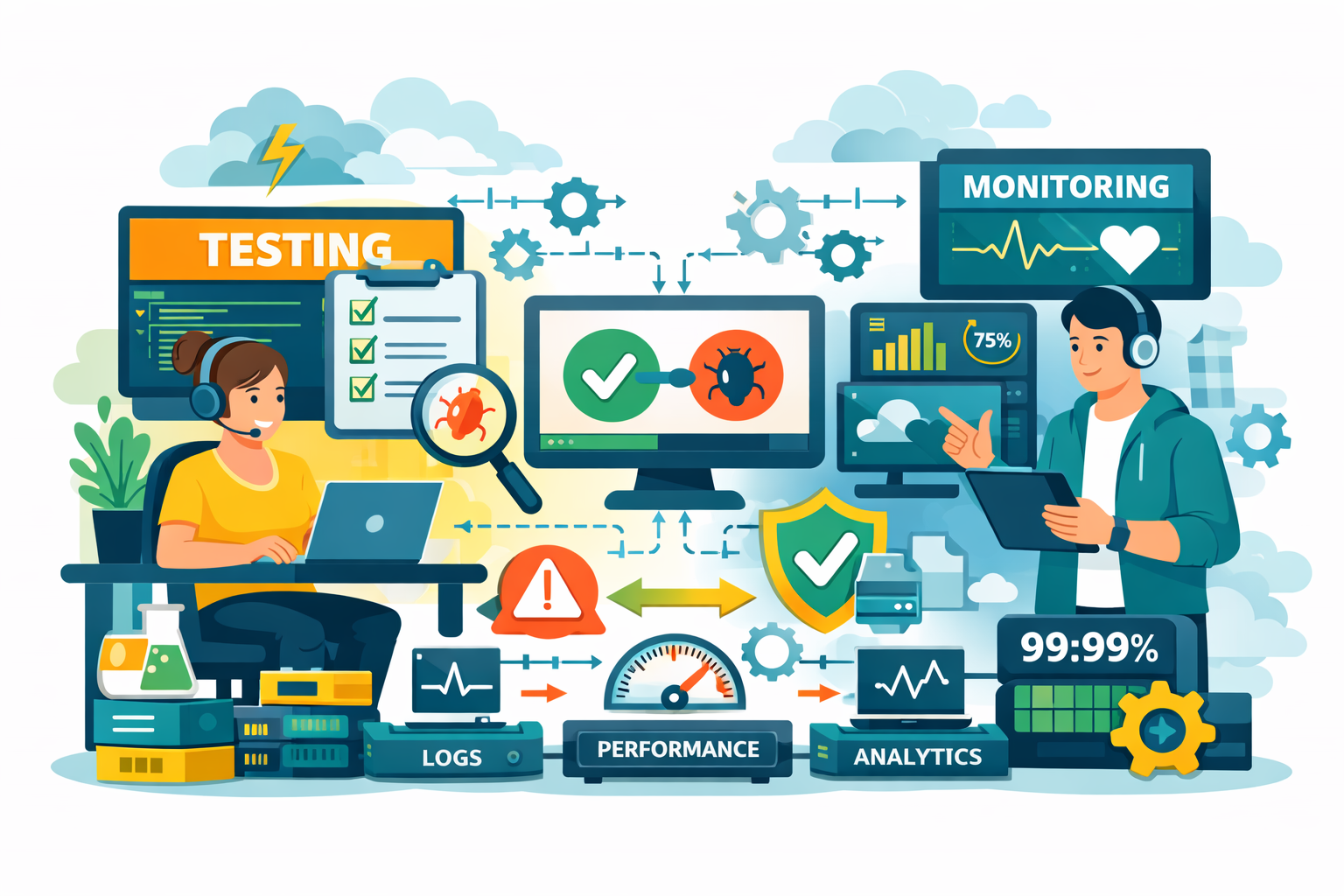
Recovery Validation
التحقق من الاسترداد
Conducting periodic recovery tests to simulate real-world failure scenarios, ensuring data can be restored quickly and accurately when needed.
إجراء اختبارات استرداد دورية لمحاكاة سيناريوهات الفشل في العالم الحقيقي، مما يضمن إمكانية استعادة البيانات بسرعة وبدقة عند الحاجة.
Proactive Performance Tracking
تتبع الأداء الاستباقي
Monitoring tools continuously track system performance and backup success rates, identifying potential risks before they escalate into major issues.
تتتبع أدوات المراقبة باستمرار أداء النظام ومعدلات نجاح النسخ الاحتياطي، مما يحدد المخاطر المحتملة قبل أن تتفاقم إلى مشاكل رئيسية.
Integrity & Compliance
النزاهة والامتثال
Verifying data integrity to confirm restored information is usable, while regularly updating procedures to align with evolving infrastructure.
التحقق من سلامة البيانات للتأكد من أن المعلومات المستعادة صالحة للاستخدام، مع تحديث الإجراءات بانتظام لتتماشى مع البنية التحتية المتطورة.
Reliability Assurance
ضمان الموثوقية
Continuous Testing & Monitoring
الاختبار والمراقبة المستمرة
Recovery Validation
التحقق من الاسترداد
Conducting periodic recovery tests to simulate real-world failure scenarios, ensuring data can be restored quickly and accurately when needed.
إجراء اختبارات استرداد دورية لمحاكاة سيناريوهات الفشل في العالم الحقيقي، مما يضمن إمكانية استعادة البيانات بسرعة وبدقة عند الحاجة.
Proactive Performance Tracking
تتبع الأداء الاستباقي
Monitoring tools continuously track system performance and backup success rates, identifying potential risks before they escalate into major issues.
تتتبع أدوات المراقبة باستمرار أداء النظام ومعدلات نجاح النسخ الاحتياطي، مما يحدد المخاطر المحتملة قبل أن تتفاقم إلى مشاكل رئيسية.
Integrity & Compliance
النزاهة والامتثال
Verifying data integrity to confirm restored information is usable, while regularly updating procedures to align with evolving infrastructure.
التحقق من سلامة البيانات للتأكد من أن المعلومات المستعادة صالحة للاستخدام، مع تحديث الإجراءات بانتظام لتتماشى مع البنية التحتية المتطورة.
What We Can Do For You
We set up secure backup systems to protect your data from loss, failure, or cyber threats.
We configure scheduled and automated backups to ensure continuous data protection.
We store backups securely across multiple locations for maximum reliability and safety.
We implement full, incremental, and cloud-based backups tailored to your business needs.
We create structured recovery plans to restore systems quickly after disruptions.
We ensure rapid recovery with defined RTO and RPO strategies to minimize downtime.

Let's Connect Today!
My Company
- Garhoud Views Building – 7th Floor -Office 711-01 Dubai UAE
- +971509862203
- +971509862239
- info@itdtech.ae