
Optimization & Performance
تحسين الأداء والكفاءة

Performance Optimization تحسين الأداء
Improve speed, efficiency, and responsiveness. تحسين السرعة والكفاءة والاستجابة.

Fast Loading تحميل سريع
Deliver content quickly with minimal delays. عرض المحتوى بسرعة مع أقل قدر من التأخير.

Cross-Device Efficiency كفاءة عبر الأجهزة
Ensure consistent performance across devices. ضمان أداء متسق عبر جميع الأجهزة.

User Experience تجربة المستخدم
Enhance satisfaction with fast, smooth platforms. تعزيز رضا المستخدم من خلال منصات سريعة وسلسة.

Higher Engagement تفاعل أعلى
Increase interaction and reduce bounce rates. زيادة التفاعل وتقليل معدل الارتداد.

SEO & Growth تحسين محركات البحث والنمو
Boost visibility and support long-term growth. تعزيز الظهور ودعم النمو طويل المدى.
Optimization & Performance
تحسين الأداء والكفاءة
Performance Optimization تحسين الأداء
Improve speed, efficiency, and responsiveness. تحسين السرعة والكفاءة والاستجابة.
Fast Loading تحميل سريع
Deliver content quickly with minimal delays. عرض المحتوى بسرعة مع أقل قدر من التأخير.
Cross-Device Efficiency كفاءة عبر الأجهزة
Ensure consistent performance across devices. ضمان أداء متسق عبر جميع الأجهزة.
User Experience تجربة المستخدم
Enhance satisfaction with fast, smooth platforms. تعزيز رضا المستخدم من خلال منصات سريعة وسلسة.
Higher Engagement تفاعل أعلى
Increase interaction and reduce bounce rates. زيادة التفاعل وتقليل معدل الارتداد.
SEO & Growth تحسين محركات البحث والنمو
Boost visibility and support long-term growth. تعزيز الظهور ودعم النمو طويل المدى.
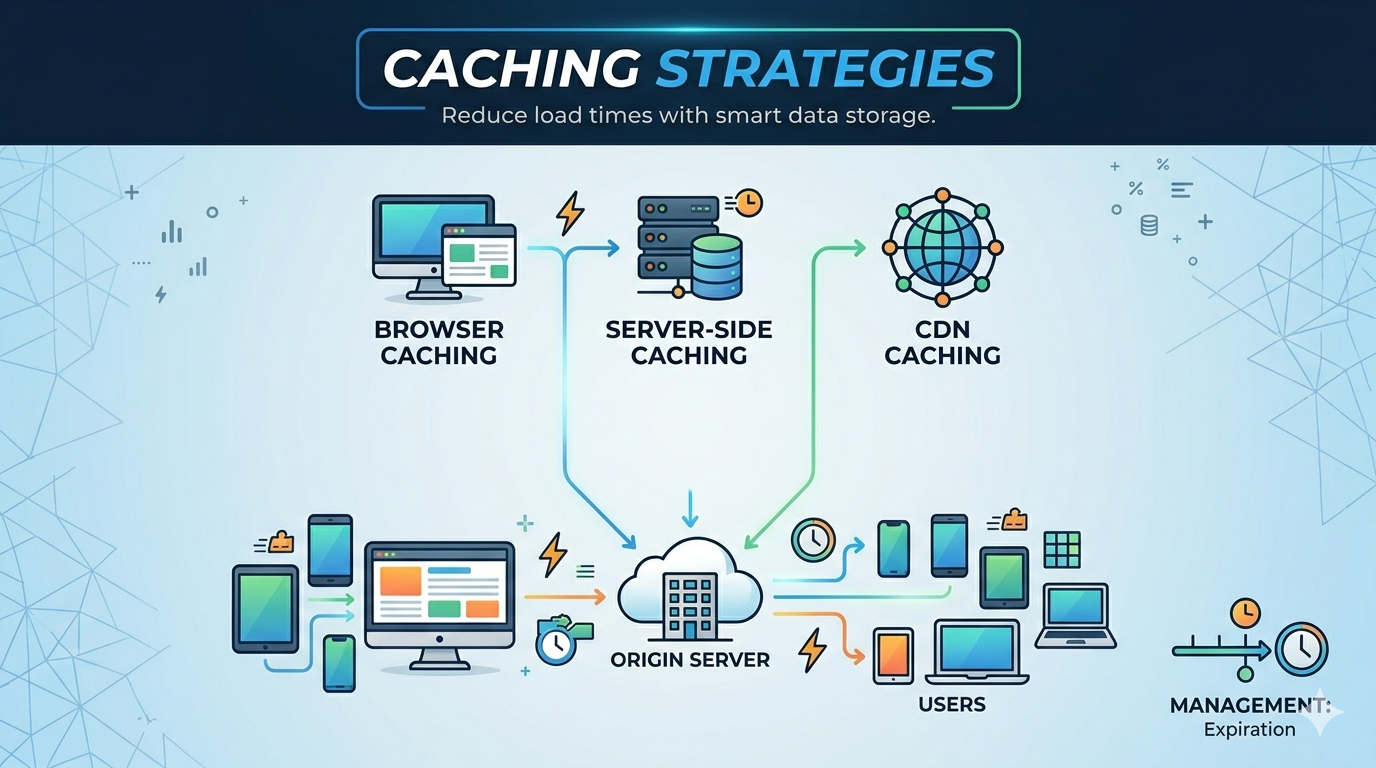
استراتيجيات التخزين المؤقت
تسريع تسليم البيانات
تلعب التخزين المؤقت دورًا حاسمًا في تحسين سرعة الموقع من خلال تخزين البيانات التي يتم الوصول إليها بشكل متكرر مؤقتًا، بحيث يمكن تسليمها بشكل أسرع للمستخدمين. تقلل تقنيات مثل التخزين المؤقت للمتصفح، والتخزين المؤقت على جانب الخادم، وتخزين شبكة توصيل المحتوى (CDN) من الحاجة إلى جلب البيانات بشكل متكرر من الخادم الأصلي. من خلال تقليل طلبات الخادم وتحسين استرجاع البيانات، يعزز التخزين المؤقت الأداء بشكل كبير، ويقلل من زمن الانتظار، ويضمن تجربة تصفح أكثر سلاسة. إدارة التخزين المؤقت بشكل صحيح، بما في ذلك إبطال التخزين المؤقت وسياسات انتهاء الصلاحية، أمر ضروري للحفاظ على تحديث المحتوى مع الحفاظ على السرعة.
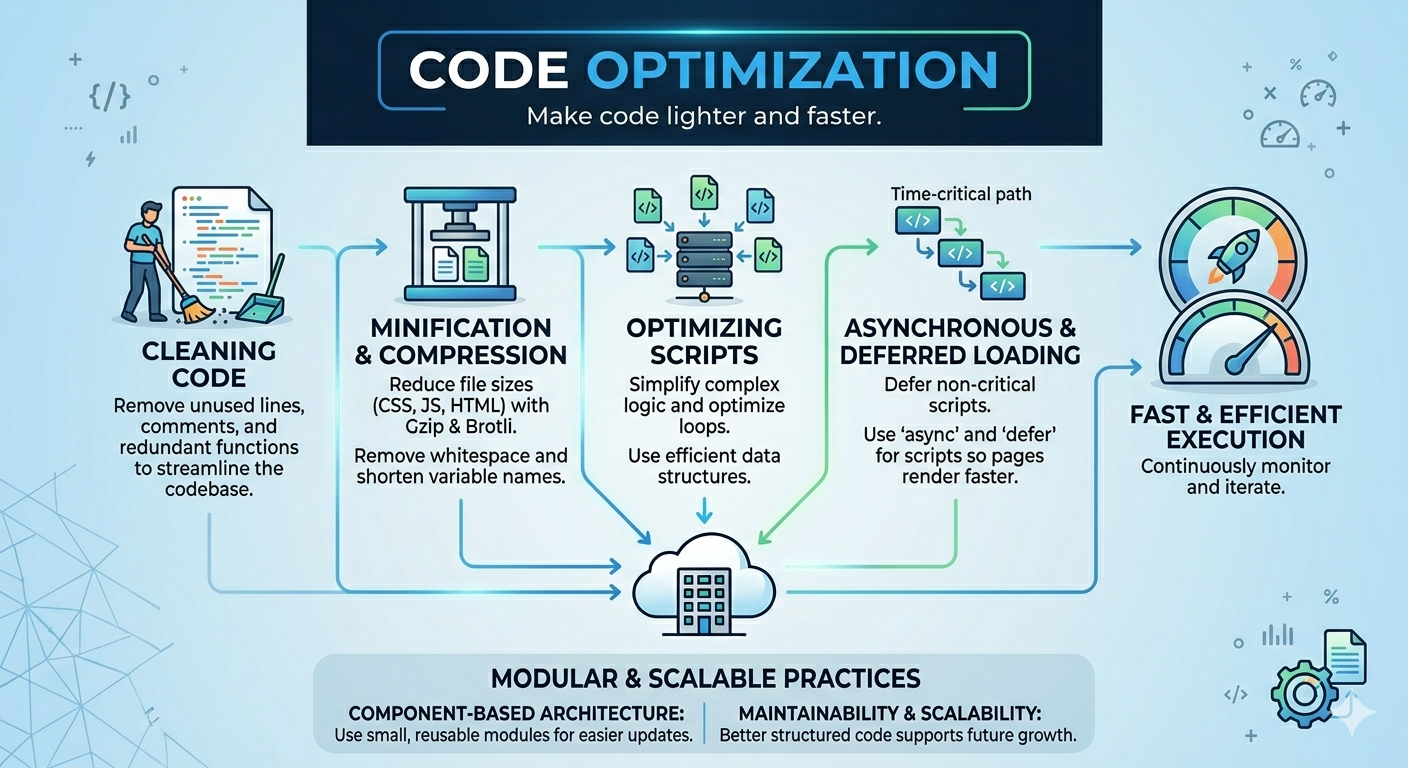
تحسين الشيفرة
اجعل الشيفرة أخف وأسرع.
يتضمن تحسين الشيفرة تنقيح HTML وCSS وJavaScript لتقليل التعقيد غير الضروري وتحسين سرعة التنفيذ. يشمل ذلك إزالة الشيفرة غير المستخدمة، وتقليل أحجام الملفات من خلال الضغط والتقليل، وتحسين السكربتات لتحميلها بكفاءة. الشيفرة النظيفة والمهيكلة بشكل جيد لا تحسن الأداء فحسب، بل تعزز أيضًا القابلية للصيانة وقابلية التوسع. تساعد تقنيات مثل التحميل غير المتزامن، والسكربتات المؤجلة، وممارسات البرمجة المودولية في ضمان أن صفحات الويب تُعرض بسرعة وتعمل بسلاسة عبر جميع البيئات.
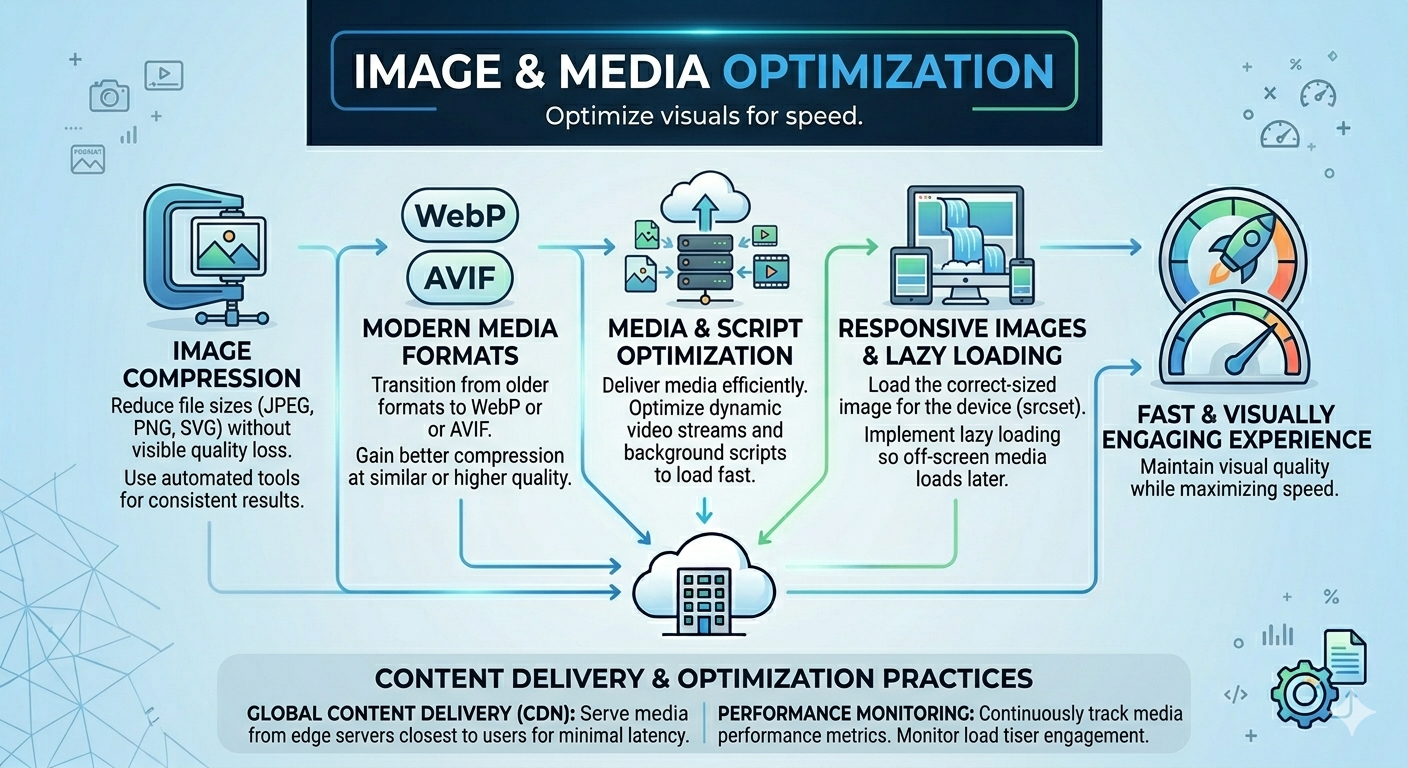
تحسين الصور والوسائط
قم بتحسين المرئيات للسرعة.
غالبًا ما تمثل الصور وملفات الوسائط الجزء الأكبر من وقت تحميل صفحة الويب. يتضمن تحسين هذه الأصول ضغط الصور، واستخدام تنسيقات حديثة مثل WebP، وتنفيذ صور استجابة تتكيف مع أحجام الشاشات المختلفة. يضمن التحميل الكسول تحميل الصور فقط عندما تدخل في عرض المستخدم، مما يقلل من وقت التحميل الأولي. يحافظ تحسين الوسائط بشكل صحيح على الجودة البصرية بينما يحسن الأداء بشكل كبير، مما يضمن للمستخدمين تجربة سريعة وجذابة بصريًا.
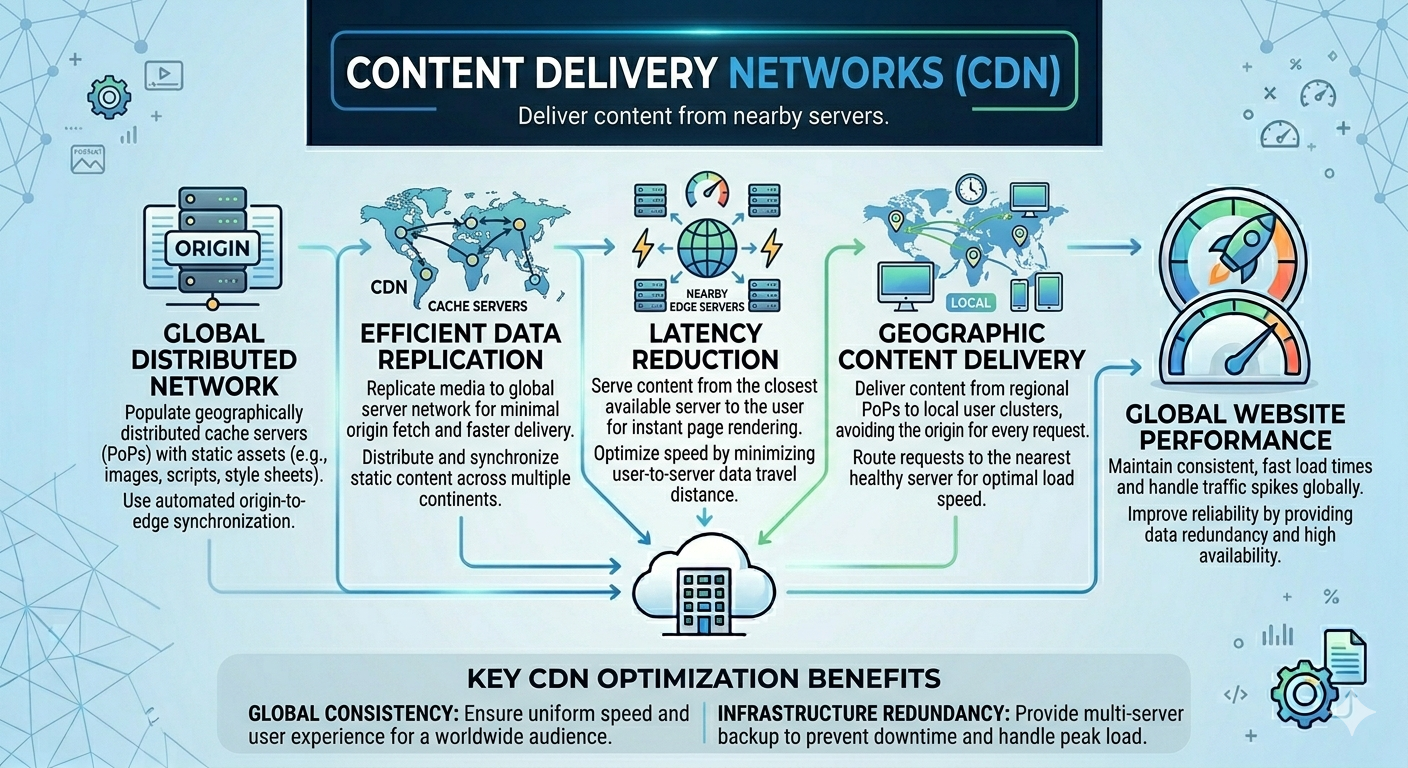
شبكات توصيل المحتوى (CDN)
توصيل المحتوى من الخوادم القريبة.
تحسن شبكة توصيل المحتوى (CDN) أداء الموقع الإلكتروني من خلال توزيع المحتوى عبر عدة خوادم تقع في مواقع جغرافية مختلفة. عندما يصل المستخدمون إلى موقع ويب، يتم توصيل المحتوى من أقرب خادم، مما يقلل من زمن الانتظار ويحسن سرعة التحميل. تساعد شبكات توصيل المحتوى أيضًا في التعامل مع أحجام المرور العالية، وتقليل الحمل على الخادم، وتحسين الاعتمادية من خلال توفير النسخ الاحتياطية. يضمن ذلك أداءً متسقًا بغض النظر عن موقع المستخدم، مما يجعلها ضرورية للمواقع العالمية التي تهدف إلى تقديم تجارب سريعة وسلسة.
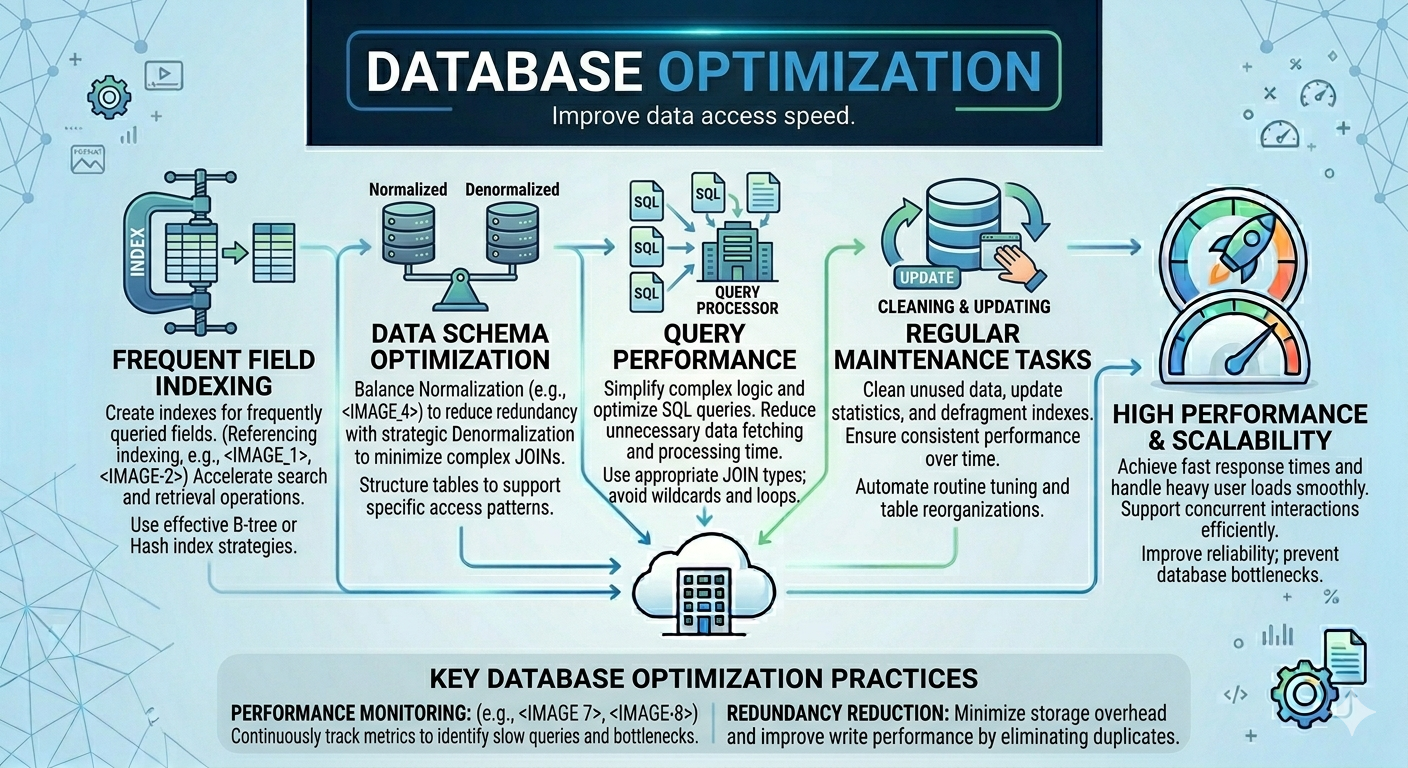
تحسين قاعدة البيانات
تحسين سرعة الوصول إلى البيانات.
إدارة قاعدة البيانات بكفاءة أمر ضروري للحفاظ على أداء سريع للموقع الإلكتروني، خاصةً للمواقع الديناميكية والتطبيقات. يتضمن تحسين قاعدة البيانات فهرسة الحقول التي يتم الاستعلام عنها بشكل متكرر، وتقليل البيانات الزائدة، وتحسين الاستعلامات لتقليل وقت المعالجة. تساعد مهام الصيانة الدورية مثل تنظيف البيانات غير المستخدمة، وتحديث الفهارس، ومراقبة أداء الاستعلامات في ضمان تشغيل قاعدة البيانات بكفاءة. تقلل قاعدة البيانات المحسّنة جيدًا من أوقات الاستجابة، وتحسن قابلية التوسع، وتدعم التفاعلات السلسة حتى تحت الحمل الثقيل.
Optimization Lifecycle
دورة حياة التحسين
المراقبة المستمرة والتحسين
المراقبة والتحسين المستمر
Optimization is not a one-time task; it requires an ongoing proactive cycle. By continuously tracking performance metrics and server health, we detect slowdowns before they impact the user, ensuring the digital foundation remains stable as global traffic grows.
التحسين ليس مهمة لمرة واحدة؛ بل يتطلب دورة استباقية مستمرة. من خلال التتبع المستمر لمقاييس الأداء وصحة الخادم، نكتشف أي تباطؤ قبل أن يؤثر على المستخدم، مما يضمن بقاء القاعدة الرقمية مستقرة مع نمو حجم الزيارات.
Through regular testing across all devices and the resolution of backend bottlenecks, we create a resilient infrastructure. This allows platforms to adapt to evolving technologies and user expectations while maintaining the highest performance standards.
من خلال الاختبارات المنتظمة عبر جميع الأجهزة ومعالجة اختناقات الأنظمة الخلفية، ننشئ بنية تحتية مرنة. يتيح ذلك للمنصات التكيف مع التقنيات المتطورة وتوقعات المستخدمين مع الحفاظ على أعلى معايير الأداء.

Optimization Lifecycle
دورة حياة التحسين
المراقبة المستمرة والتحسين
المراقبة والتحسين المستمر
Optimization is not a one-time task; it requires an ongoing proactive cycle. By continuously tracking performance metrics and server health, we detect slowdowns before they impact the user, ensuring the digital foundation remains stable as global traffic grows.
التحسين ليس مهمة لمرة واحدة؛ بل يتطلب دورة استباقية مستمرة. من خلال التتبع المستمر لمقاييس الأداء وصحة الخادم، نكتشف أي تباطؤ قبل أن يؤثر على المستخدم، مما يضمن بقاء القاعدة الرقمية مستقرة مع نمو حجم الزيارات.
Through regular testing across all devices and the resolution of backend bottlenecks, we create a resilient infrastructure. This allows platforms to adapt to evolving technologies and user expectations while maintaining the highest performance standards.
من خلال الاختبارات المنتظمة عبر جميع الأجهزة ومعالجة اختناقات الأنظمة الخلفية، ننشئ بنية تحتية مرنة. يتيح ذلك للمنصات التكيف مع التقنيات المتطورة وتوقعات المستخدمين مع الحفاظ على أعلى معايير الأداء.
Architecture Resilience
مرونة المعمارية
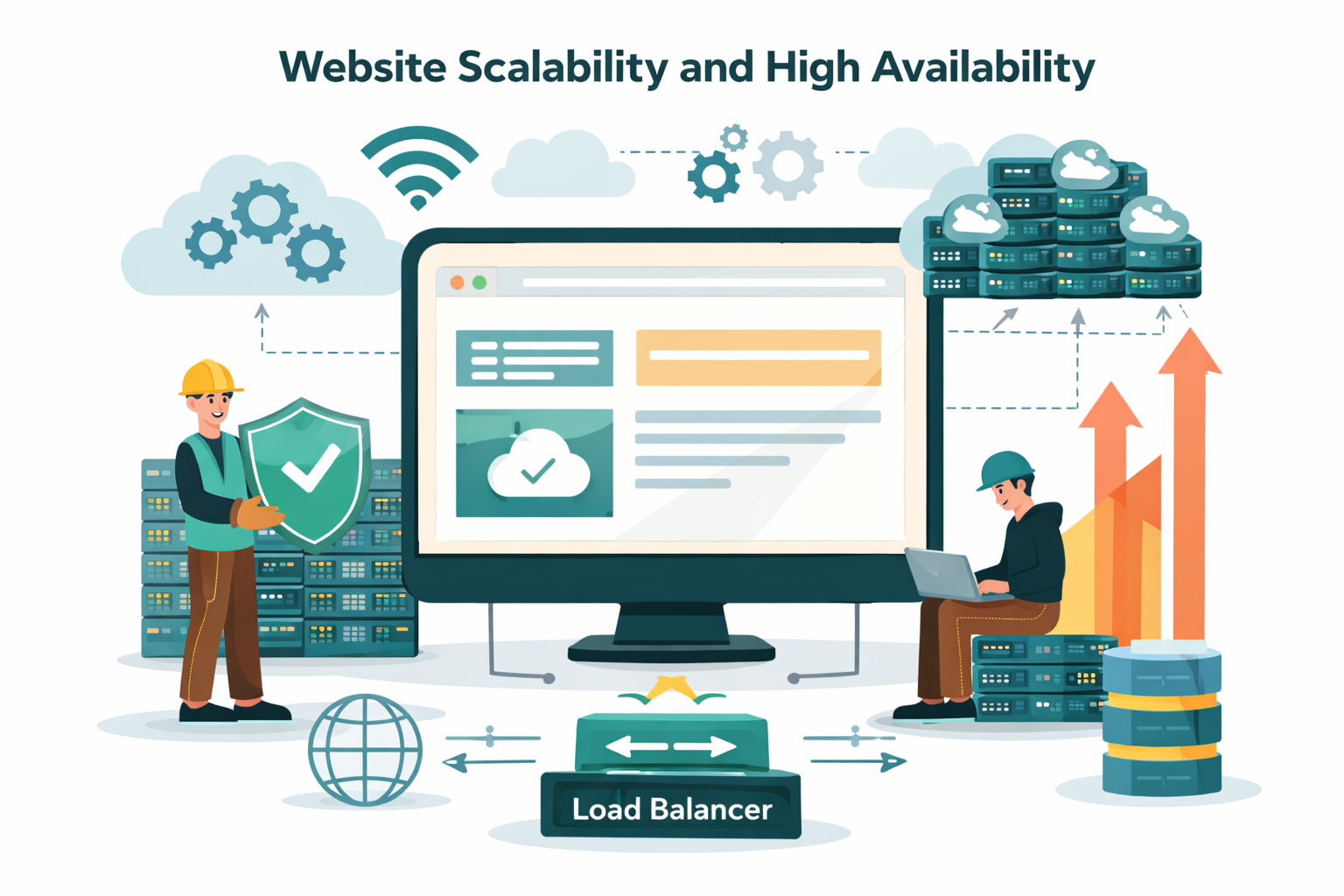
Dynamic Scalability and High Availability
توسع ديناميكي وتوافر عالٍ
As traffic increases, scalable infrastructure becomes the engine of growth. By dynamically adjusting resources, we prevent the slow load times and system crashes that hinder commercial expansion, ensuring a smooth digital experience even during extreme usage spikes.
مع زيادة عدد الزيارات، تصبح البنية التحتية القابلة للتوسع هي محرك النمو. من خلال ضبط الموارد ديناميكياً، نمنع بطء التحميل وأعطال النظام التي تعيق التوسع التجاري، مما يضمن تجربة رقمية سلسة حتى أثناء ذروة الاستخدام.
Through Load Balancing and distributed systems, traffic is spread across multiple nodes to eliminate single points of failure. This adaptable logic supports long-term growth without requiring total system overhauls, maintaining 99.99% uptime for global users.
من خلال موازنة التحميل والأنظمة الموزعة، يتم توزيع الزيارات عبر عُقد متعددة للقضاء على نقاط الفشل المنفردة. يدعم هذا المنطق التكيفي النمو طويل الأمد دون الحاجة لتغيير الأنظمة بالكامل، مع الحفاظ على استمرارية العمل لجميع المستخدمين.
Architecture Resilience
مرونة المعمارية
Dynamic Scalability and High Availability
توسع ديناميكي وتوافر عالٍ
As traffic increases, scalable infrastructure becomes the engine of growth. By dynamically adjusting resources, we prevent the slow load times and system crashes that hinder commercial expansion, ensuring a smooth digital experience even during extreme usage spikes.
مع زيادة عدد الزيارات، تصبح البنية التحتية القابلة للتوسع هي محرك النمو. من خلال ضبط الموارد ديناميكياً، نمنع بطء التحميل وأعطال النظام التي تعيق التوسع التجاري، مما يضمن تجربة رقمية سلسة حتى أثناء ذروة الاستخدام.
Through Load Balancing and distributed systems, traffic is spread across multiple nodes to eliminate single points of failure. This adaptable logic supports long-term growth without requiring total system overhauls, maintaining 99.99% uptime for global users.
من خلال موازنة التحميل والأنظمة الموزعة، يتم توزيع الزيارات عبر عُقد متعددة للقضاء على نقاط الفشل المنفردة. يدعم هذا المنطق التكيفي النمو طويل الأمد دون الحاجة لتغيير الأنظمة بالكامل، مع الحفاظ على استمرارية العمل لجميع المستخدمين.
ما يمكننا القيام به من أجلك
نحن نضمن استضافة موثوقة واستجابة سريعة للخادم لتحقيق أداء سلس ومتسق.
نقوم بتحسين الصور والأصول الإعلامية لتقليل أوقات التحميل وتحسين الكفاءة.
نقوم بتبسيط الكود وإزالة السكربتات غير الضرورية لتعزيز الأداء والاستقرار.
نقوم بتنفيذ استراتيجيات التخزين المؤقت لتحسين سرعة التحميل وتقليل الضغط على الخادم.
نطبق تقنيات الضغط، والتحميل الكسول، والسكربتات غير المتزامنة لتحقيق أقصى قدر من الكفاءة.
نصمم تجارب خفيفة وسريعة الاستجابة مُحسّنة لسرعة الهواتف المحمولة وسهولة الاستخدام.

تواصل معنا اليوم!
شركتي
- مبنى غرهود فيوز - الطابق السابع - المكتب 711-01 دبي، الإمارات العربية المتحدة
- +971509862203
- +971509862239
- info@itdtech.ae