
Optimization & Performance
تحسين الأداء والكفاءة

Performance Optimization تحسين الأداء
Improve speed, efficiency, and responsiveness. تحسين السرعة والكفاءة والاستجابة.

Fast Loading تحميل سريع
Deliver content quickly with minimal delays. عرض المحتوى بسرعة مع أقل قدر من التأخير.

Cross-Device Efficiency كفاءة عبر الأجهزة
Ensure consistent performance across devices. ضمان أداء متسق عبر جميع الأجهزة.

User Experience تجربة المستخدم
Enhance satisfaction with fast platforms. تعزيز رضا المستخدم من خلال منصات سريعة.

Higher Engagement تفاعل أعلى
Increase interaction and reduce bounce rates. زيادة التفاعل وتقليل معدل الارتداد.

SEO & Growth تحسين محركات البحث والنمو
Boost visibility and support long-term growth. تعزيز الظهور ودعم النمو طويل المدى.
Optimization & Performance
تحسين الأداء والكفاءة
Performance Optimization تحسين الأداء
Improve speed, efficiency, and responsiveness. تحسين السرعة والكفاءة والاستجابة.
Fast Loading تحميل سريع
Deliver content quickly with minimal delays. عرض المحتوى بسرعة مع أقل قدر من التأخير.
Cross-Device Efficiency كفاءة عبر الأجهزة
Ensure consistent performance across devices. ضمان أداء متسق عبر جميع الأجهزة.
User Experience تجربة المستخدم
Enhance satisfaction with fast platforms. تعزيز رضا المستخدم من خلال منصات سريعة.
Higher Engagement تفاعل أعلى
Increase interaction and reduce bounce rates. زيادة التفاعل وتقليل معدل الارتداد.
SEO & Growth تحسين محركات البحث والنمو
Boost visibility and support long-term growth. تعزيز الظهور ودعم النمو طويل المدى.
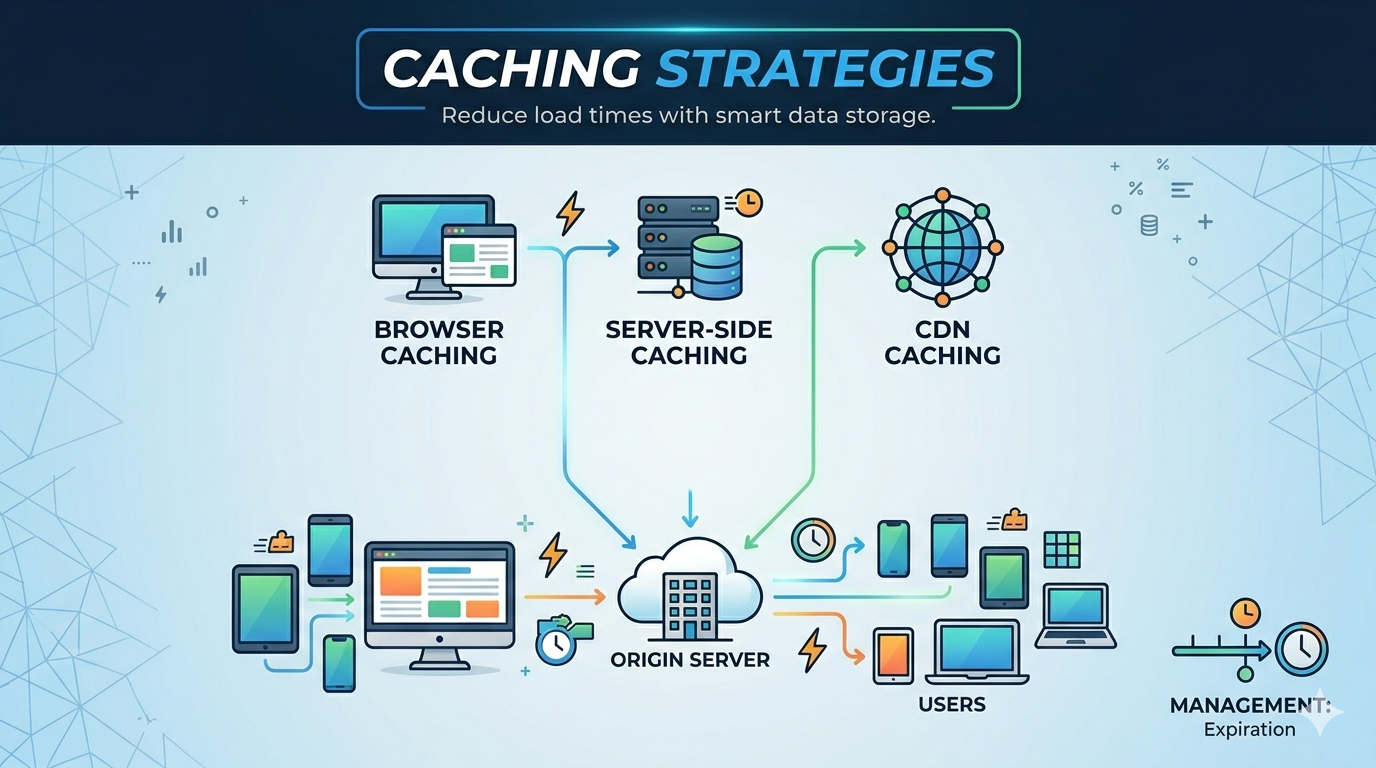
Caching Strategies
Speed up data delivery
Caching plays a critical role in improving website speed by temporarily storing frequently accessed data so it can be delivered faster to users. Techniques such as browser caching, server-side caching, and Content Delivery Network (CDN) caching reduce the need to repeatedly fetch data from the origin server. By minimizing server requests and optimizing data retrieval, caching significantly enhances performance, reduces latency, and ensures a smoother browsing experience. Proper cache management, including cache invalidation and expiration policies, is essential to keep content up-to-date while maintaining speed.
Code Optimization
Make code lighter and faster.
Optimizing code involves refining HTML, CSS, and JavaScript to reduce unnecessary complexity and improve execution speed. This includes removing unused code, minimizing file sizes through compression and minification, and optimizing scripts to load efficiently. Clean and well-structured code not only improves performance but also enhances maintainability and scalability. Techniques such as asynchronous loading, deferred scripts, and modular coding practices help ensure that web pages render quickly and function smoothly across all environments.
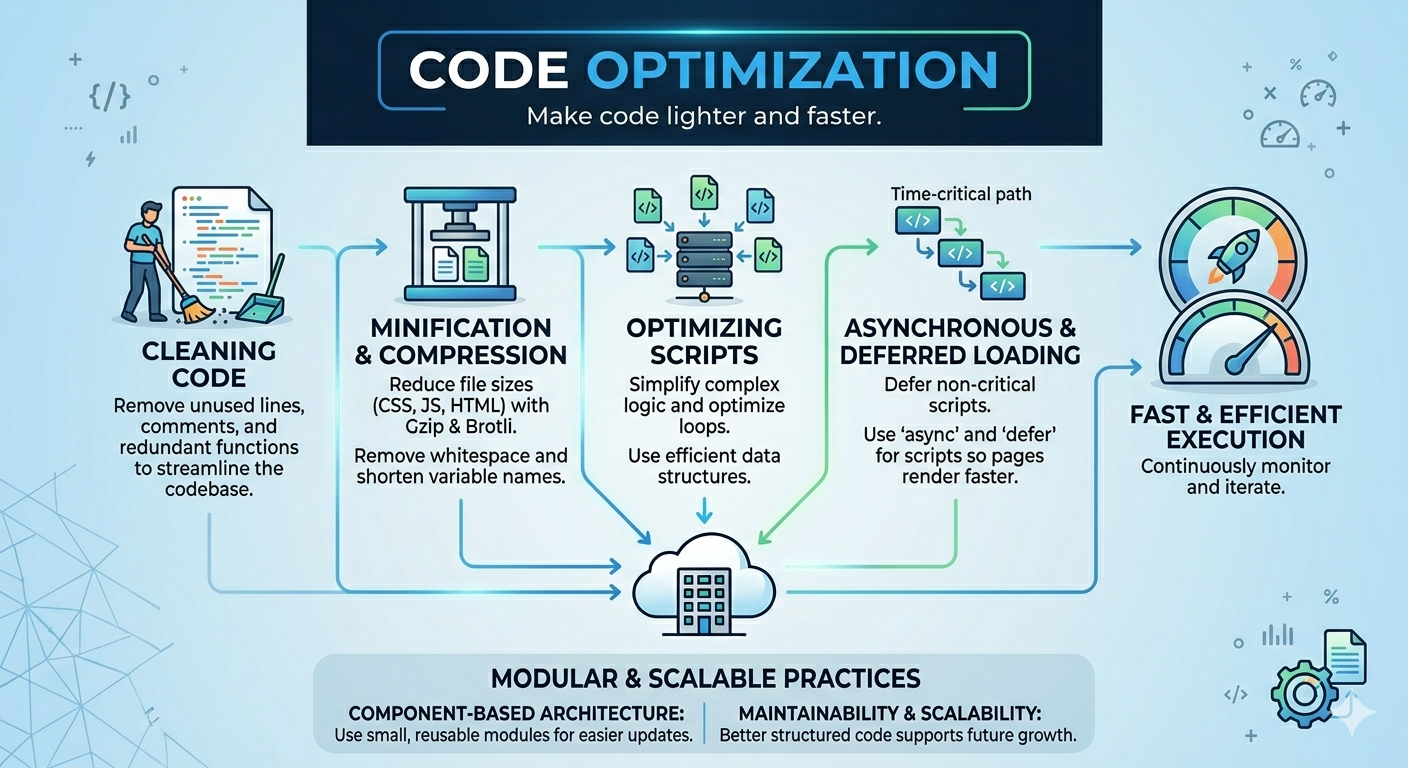
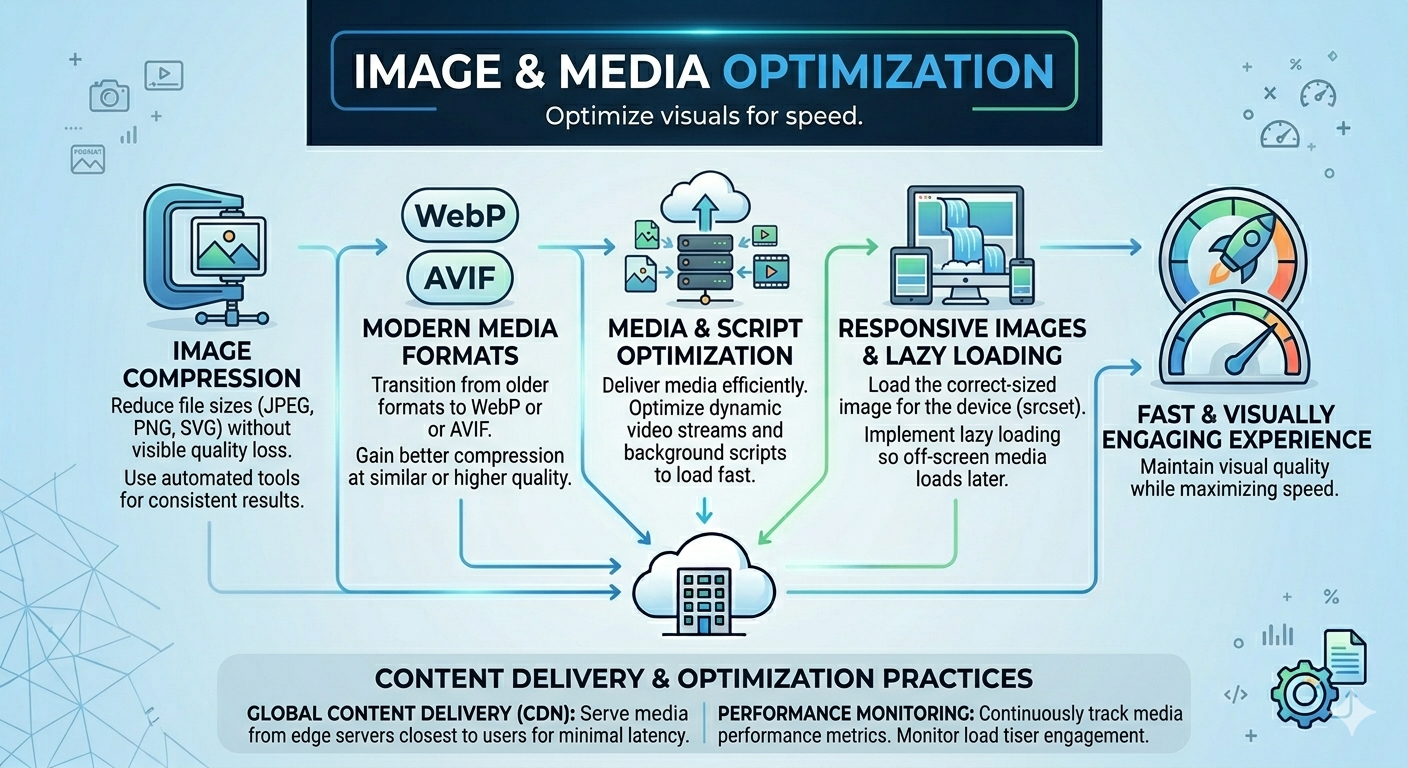
Image & Media Optimization
Optimize visuals for speed.
Images and media files often account for the largest portion of a webpage’s load time. Optimizing these assets involves compressing images, using modern formats like WebP, and implementing responsive images that adapt to different screen sizes. Lazy loading ensures that images are only loaded when they enter the user’s viewport, reducing initial load time. Proper media optimization maintains visual quality while significantly improving performance, ensuring users get a fast yet visually engaging experience.
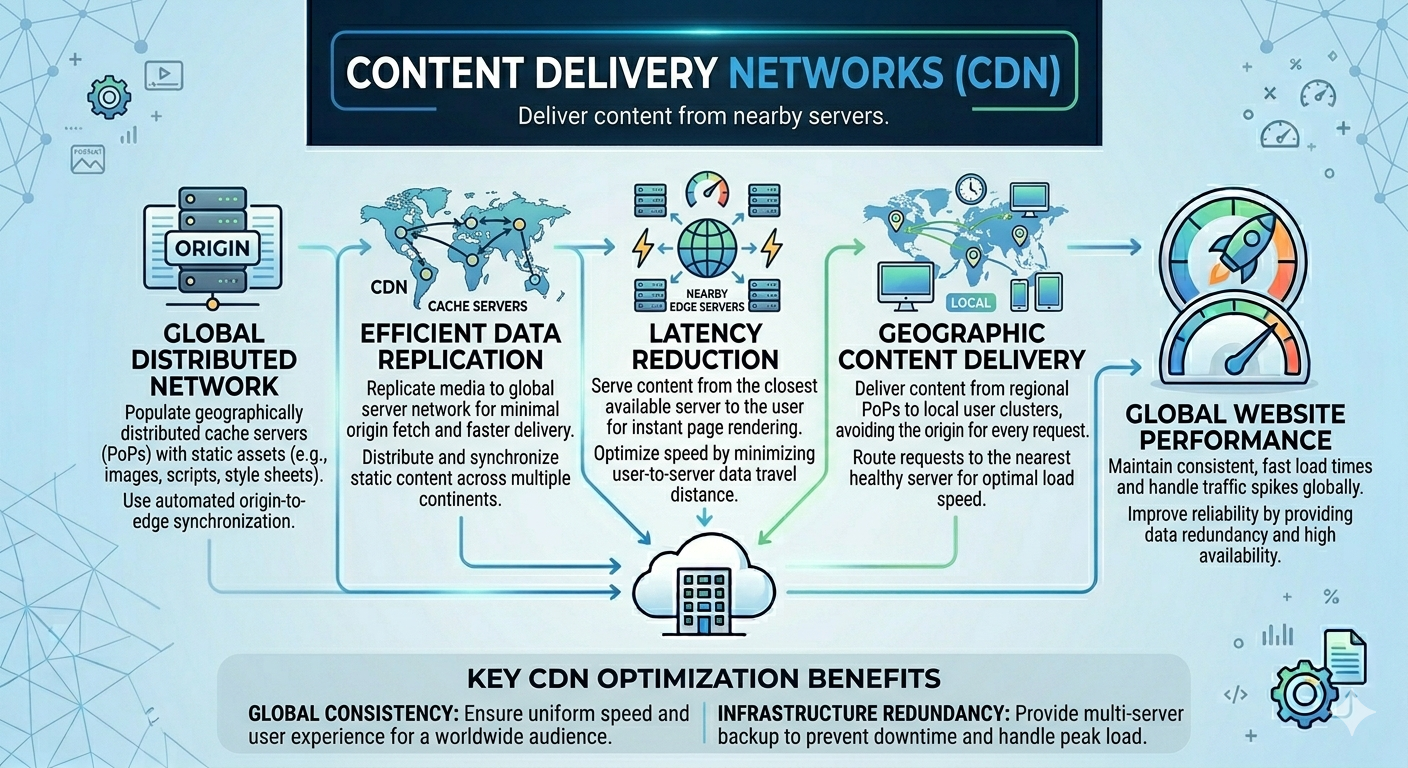
Content Delivery Networks (CDN)
Deliver content from nearby servers.
A Content Delivery Network (CDN) improves website performance by distributing content across multiple geographically located servers. When users access a website, content is delivered from the nearest server, reducing latency and improving load speed. CDNs also help handle high traffic volumes, reduce server load, and improve reliability by providing redundancy. This ensures consistent performance regardless of user location, making it essential for global websites aiming to deliver fast and seamless experiences.
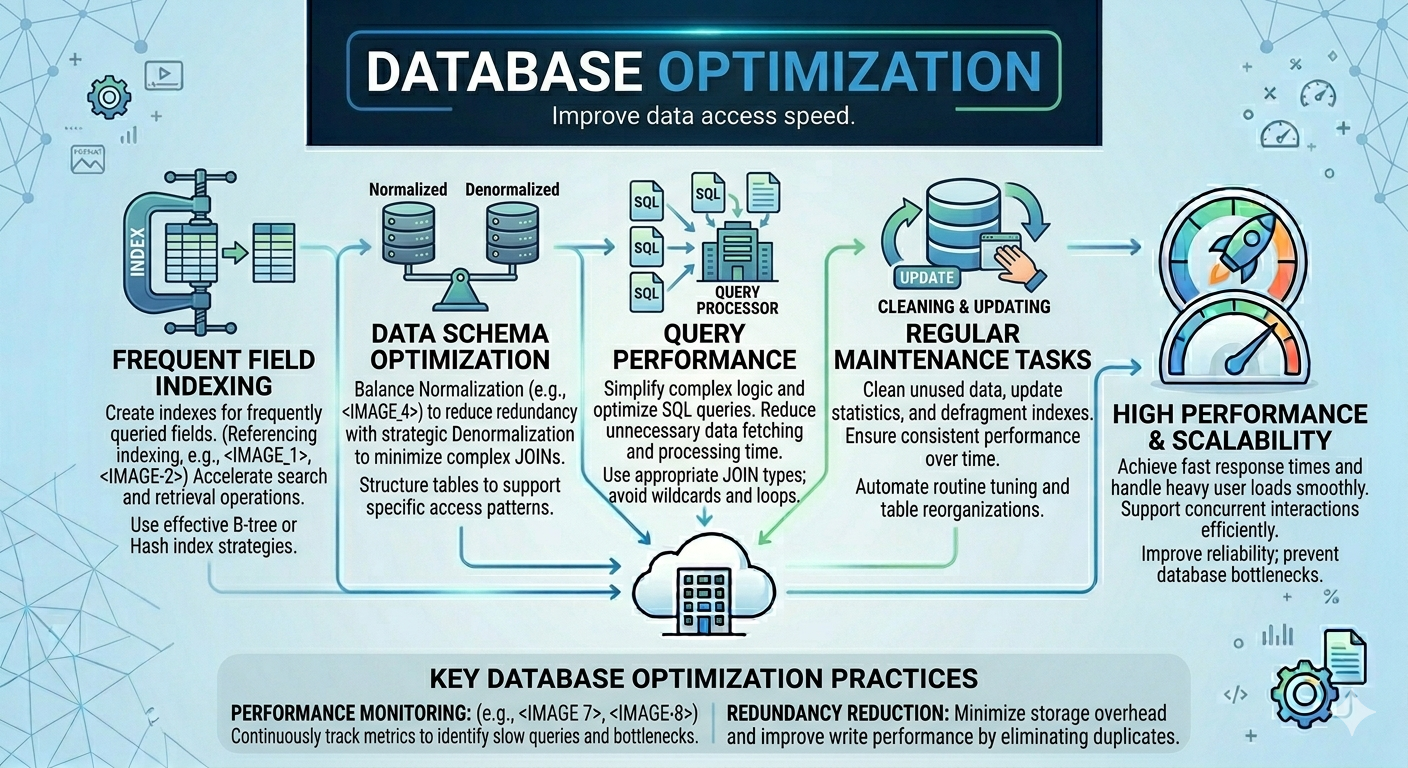
Database Optimization
Improve data access speed.
Efficient database management is essential for maintaining fast website performance, especially for dynamic websites and applications. Database optimization involves indexing frequently queried fields, reducing redundant data, and optimizing queries to minimize processing time. Regular maintenance tasks such as cleaning unused data, updating indexes, and monitoring query performance help ensure that the database operates efficiently. A well-optimized database reduces response times, improves scalability, and supports smooth interactions even under heavy load.
Optimization Lifecycle
دورة حياة التحسين
Continuous Monitoring and Improvement
المراقبة والتحسين المستمر
Optimization is not a one-time task; it requires an ongoing proactive cycle. By continuously tracking performance metrics and server health, we detect slowdowns before they impact the user, ensuring the digital foundation remains stable as global traffic grows.
التحسين ليس مهمة لمرة واحدة؛ بل يتطلب دورة استباقية مستمرة. من خلال التتبع المستمر لمقاييس الأداء وصحة الخادم، نكتشف أي تباطؤ قبل أن يؤثر على المستخدم، مما يضمن بقاء القاعدة الرقمية مستقرة مع نمو حجم الزيارات.
Through regular testing across all devices and the resolution of backend bottlenecks, we create a resilient infrastructure. This allows platforms to adapt to evolving technologies and user expectations while maintaining the highest performance standards.
من خلال الاختبارات المنتظمة عبر جميع الأجهزة ومعالجة اختناقات الأنظمة الخلفية، ننشئ بنية تحتية مرنة. يتيح ذلك للمنصات التكيف مع التقنيات المتطورة وتوقعات المستخدمين مع الحفاظ على أعلى معايير الأداء.

Optimization Lifecycle
دورة حياة التحسين
Continuous Monitoring and Improvement
المراقبة والتحسين المستمر
Optimization is not a one-time task; it requires an ongoing proactive cycle. By continuously tracking performance metrics and server health, we detect slowdowns before they impact the user, ensuring the digital foundation remains stable as global traffic grows.
التحسين ليس مهمة لمرة واحدة؛ بل يتطلب دورة استباقية مستمرة. من خلال التتبع المستمر لمقاييس الأداء وصحة الخادم، نكتشف أي تباطؤ قبل أن يؤثر على المستخدم، مما يضمن بقاء القاعدة الرقمية مستقرة مع نمو حجم الزيارات.
Through regular testing across all devices and the resolution of backend bottlenecks, we create a resilient infrastructure. This allows platforms to adapt to evolving technologies and user expectations while maintaining the highest performance standards.
من خلال الاختبارات المنتظمة عبر جميع الأجهزة ومعالجة اختناقات الأنظمة الخلفية، ننشئ بنية تحتية مرنة. يتيح ذلك للمنصات التكيف مع التقنيات المتطورة وتوقعات المستخدمين مع الحفاظ على أعلى معايير الأداء.

Architecture Resilience
مرونة المعمارية
Dynamic Scalability and High Availability
توسع ديناميكي وتوافر عالٍ
As traffic increases, scalable infrastructure becomes the engine of growth. By dynamically adjusting resources, we prevent the slow load times and system crashes that hinder commercial expansion, ensuring a smooth digital experience even during extreme usage spikes.
مع زيادة عدد الزيارات، تصبح البنية التحتية القابلة للتوسع هي محرك النمو. من خلال ضبط الموارد ديناميكياً، نمنع بطء التحميل وأعطال النظام التي تعيق التوسع التجاري، مما يضمن تجربة رقمية سلسة حتى أثناء ذروة الاستخدام.
Through Load Balancing and distributed systems, traffic is spread across multiple nodes to eliminate single points of failure. This adaptable logic supports long-term growth without requiring total system overhauls, maintaining 99.99% uptime for global users.
من خلال موازنة التحميل والأنظمة الموزعة، يتم توزيع الزيارات عبر عُقد متعددة للقضاء على نقاط الفشل المنفردة. يدعم هذا المنطق التكيفي النمو طويل الأمد دون الحاجة لتغيير الأنظمة بالكامل، مع الحفاظ على استمرارية العمل لجميع المستخدمين.
Architecture Resilience
مرونة المعمارية
Dynamic Scalability and High Availability
توسع ديناميكي وتوافر عالٍ
As traffic increases, scalable infrastructure becomes the engine of growth. By dynamically adjusting resources, we prevent the slow load times and system crashes that hinder commercial expansion, ensuring a smooth digital experience even during extreme usage spikes.
مع زيادة عدد الزيارات، تصبح البنية التحتية القابلة للتوسع هي محرك النمو. من خلال ضبط الموارد ديناميكياً، نمنع بطء التحميل وأعطال النظام التي تعيق التوسع التجاري، مما يضمن تجربة رقمية سلسة حتى أثناء ذروة الاستخدام.
Through Load Balancing and distributed systems, traffic is spread across multiple nodes to eliminate single points of failure. This adaptable logic supports long-term growth without requiring total system overhauls, maintaining 99.99% uptime for global users.
من خلال موازنة التحميل والأنظمة الموزعة، يتم توزيع الزيارات عبر عُقد متعددة للقضاء على نقاط الفشل المنفردة. يدعم هذا المنطق التكيفي النمو طويل الأمد دون الحاجة لتغيير الأنظمة بالكامل، مع الحفاظ على استمرارية العمل لجميع المستخدمين.
What We Can Do For You
We ensure reliable hosting and fast server response for smooth and consistent performance.
We optimize images and media assets to reduce load times and improve efficiency.
We streamline code and remove unnecessary scripts to enhance performance and stability.
We implement caching strategies to improve loading speed and reduce server load.
We apply compression, lazy loading, and asynchronous scripts for maximum efficiency.
We design lightweight, responsive experiences optimized for mobile speed and usability.

Let's Connect Today!
My Company
- Garhoud Views Building – 7th Floor -Office 711-01 Dubai UAE
- +971509862203
- +971509862239
- info@itdtech.ae