
Key Things to Know About

Cloud Foundation
Cloud infrastructure powers modern web platforms.

Reliable Hosting
Secure environments store and deliver web content.
Scalable Cloud Tech
Cloud systems adapt to traffic and demand changes.

How Hosting Works
Servers process requests and deliver site content.

Hosting Types
Different hosting models offer varying performance levels.

Performance & Security
Reliable hosting ensures speed, uptime, and protection.
Cloud Foundation
Cloud infrastructure powers modern web platforms.
Reliable Hosting
Secure environments store and deliver web content.
Scalable Cloud Tech
Cloud systems adapt to traffic and demand changes.
How Hosting Works
Servers process requests and deliver site content.
Hosting Types
Different hosting models offer varying performance levels.
Performance & Security
Reliable hosting ensures speed, uptime, and protection.
This is where the theoretical architecture meets the real-world "metal." When we talk about Cloud Infrastructure, we’re talking about the engine room of your business. It’s no longer just about "renting a server"—it’s about creating a living, breathing ecosystem that responds to your customers' needs in milliseconds.
The transition to the Cloud was the moment we stopped being limited by the physical space of a data center and started building in an infinite digital landscape. In the old days, if your business grew, you had to physically buy, ship, and install new hardware—a process that took weeks and cost a fortune before you even saw a single visitor. Today, we utilize Infrastructure as Code (IaC) to deploy entire global networks in minutes, using "Virtualization" to carve out exactly the power you need, exactly when you need it, across providers like AWS, Azure, or Google Cloud.
This shift means your business is no longer tied to a single "box" that can break or overheat; your data lives in a redundant, distributed environment that is as flexible as your imagination. By using Serverless Computing and Managed Services, we remove the burden of server maintenance from your shoulders, allowing your team to focus on innovation instead of updates. We build for the "one person" who expects your site to be up and running 24/7, ensuring that your infrastructure isn't just a cost—it’s a high-speed foundation that grows with every new click.
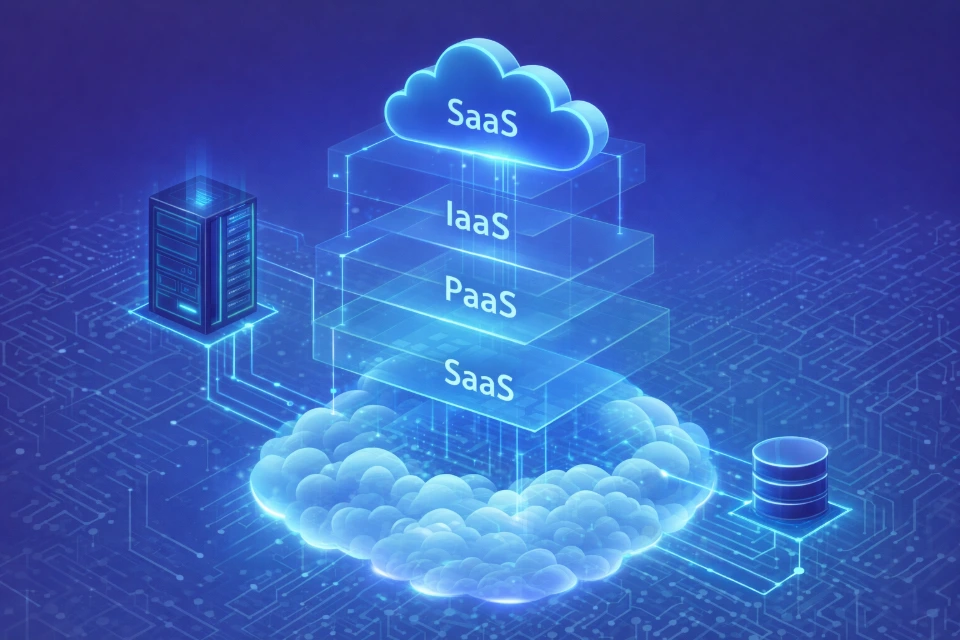
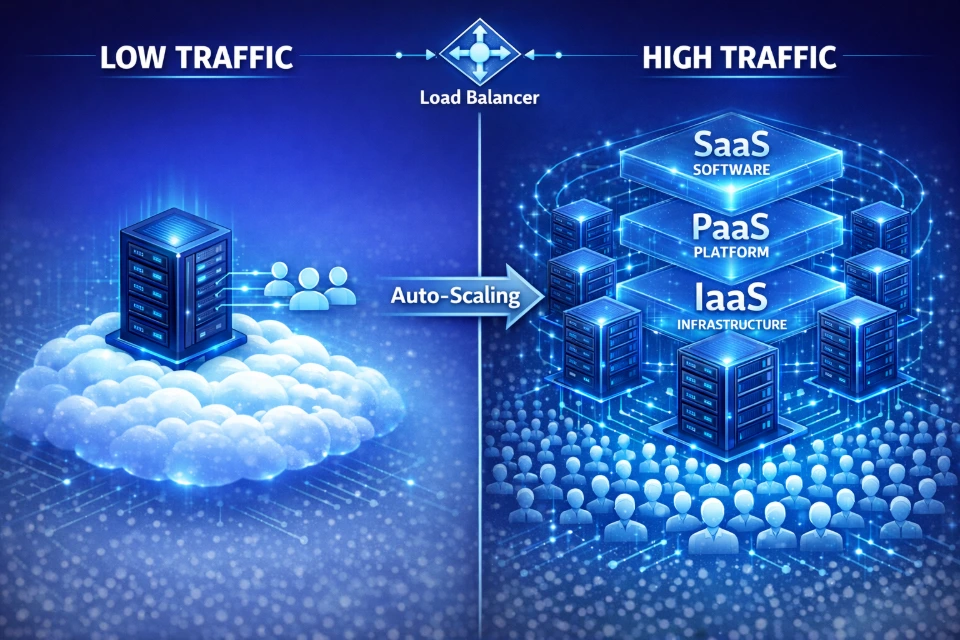
Scalability is the difference between a system that crashes during a big promotion and one that thrives under pressure. We design for Elasticity, a state where your hosting environment "breathes"—automatically adding more web servers (Horizontal Scaling) the moment traffic spikes and shrinking back down when the crowd leaves to save you money. By moving away from "Shared Hosting" to Container Orchestration with Kubernetes, we ensure that your application is isolated, secure, and capable of handling 100 or 100,000 users with the exact same level of performance.
The goal is to ensure that your "one person"—your most important customer—never feels the weight of the other 99,000 people on the site at the same time. We implement Load Balancers that act like expert traffic police, directing every visitor to the fastest, healthiest server available in real-time. When your hosting is truly scalable, you stop fearing success; you stop worrying if your site can "handle the load" and start looking for ways to invite more people in, knowing your infrastructure is ready for whatever comes next.
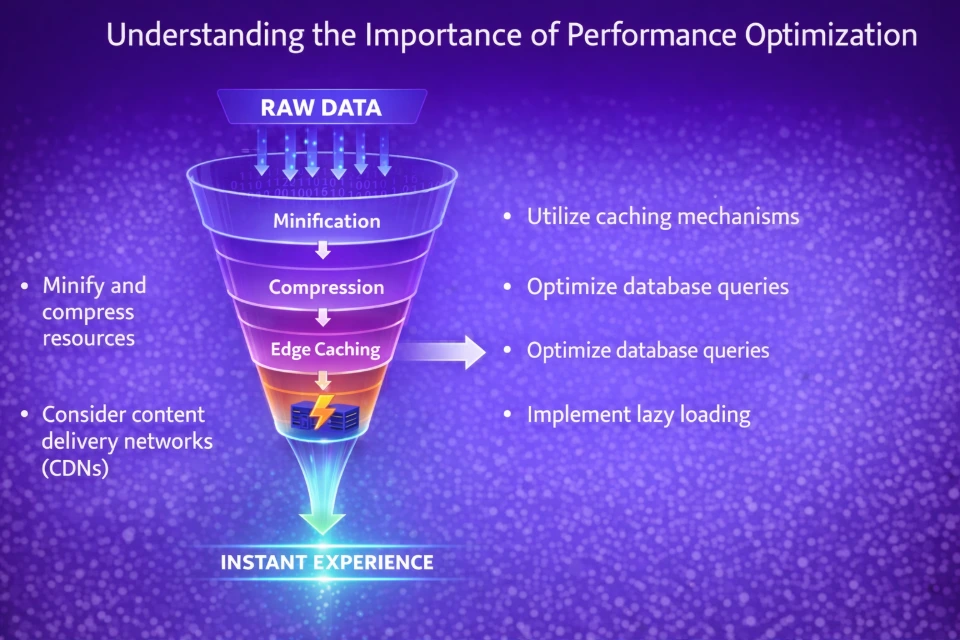
In the modern web, a one-second delay in page load time can mean a 7% drop in conversions—speed isn't just a technical metric, it’s a business requirement. We approach performance through a multi-layered strategy that starts with Minification and Image Optimization to reduce the "weight" of your site, and ends with advanced Database Indexing to ensure your data is retrieved instantly. By implementing Edge Caching, we store your site's content on servers physically located in cities like Dubai, Riyadh, or London, so your users aren't waiting for data to travel across the ocean.
Optimization is about respecting your user's time by removing every possible barrier between them and your product. We utilize Asynchronous Loading and Lazy Loading so the parts of the page your customer sees first are ready instantly, while the rest follows silently in the background. When we optimize for that "one person," we are creating a frictionless experience that feels premium and professional. A fast site doesn't just rank better on Google; it builds a level of trust with your audience that a slow, clunky system never could.
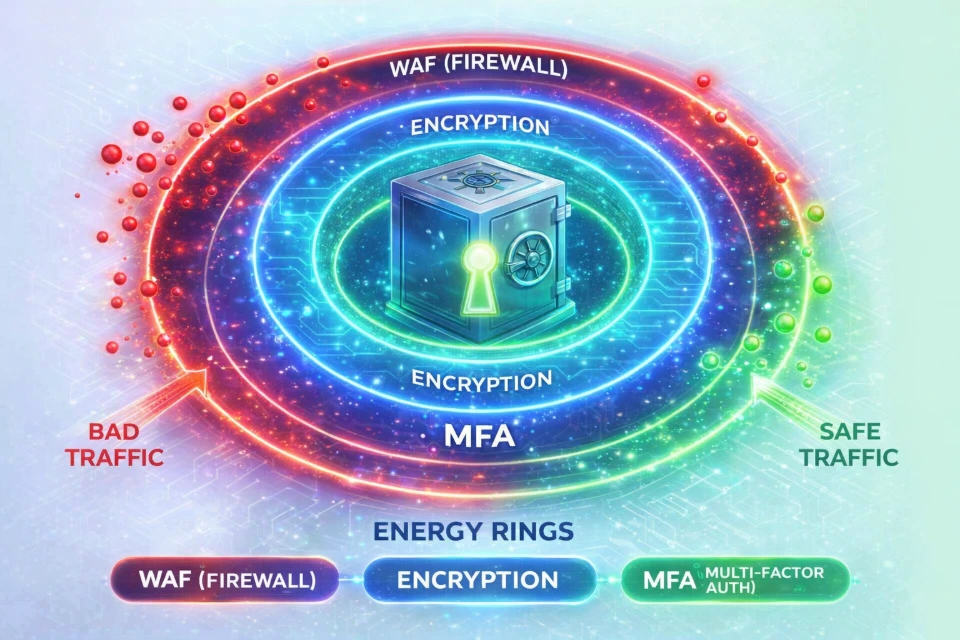
In an era where a single data breach can erase years of brand trust in seconds, security is no longer an "add-on"—it is the very DNA of your system. We move beyond simple passwords to a Zero-Trust Architecture, where every request is verified and every piece of sensitive data is shielded by End-to-End Encryption. By implementing automated Vulnerability Scanning and Web Application Firewalls (WAF), we create a proactive defense that doesn't just react to threats but anticipates them, ensuring your business stays ahead of the sophisticated landscape of modern cyber-attacks.
When we protect your system, we are protecting the "one person" who has trusted you with their personal information, their payment details, and their privacy. Security is a silent promise you make to every customer: that their digital identity is safe in your hands. By integrating Multi-Factor Authentication (MFA) and regular security audits, we turn your website from a target into a fortress. When your clients know their data is guarded by the highest industry standards, they stop worrying about "what if" and start engaging with your brand with total confidence.
A high-performance system is a living organism, and like any living thing, it needs constant care and attention to stay healthy. We implement Real-Time Monitoring and Log Aggregation to give you a "God’s-eye view" of your entire infrastructure, tracking every request and every millisecond of latency as it happens. Through Observability, we don't just see that something is slow; we see why it’s slow—allowing us to trace a bottleneck back to a specific line of code or a single database query before your users even notice a delay.
Understanding the "pulse" of your system allows us to move from being "reactive" to being "predictive," fixing issues before they ever become problems for your customers. For that "one person" trying to complete a checkout or upload a file, our monitoring ensures their experience is flawless, even during your busiest hours. By utilizing Anomaly Detection driven by AI, we can spot patterns that human eyes might miss, ensuring your platform isn't just running, but is operating at its absolute peak 24 hours a day, 365 days a year.

Scalability and Performance Optimization
التوسع وتحسين الأداء
Cloud-based hosting has transformed scalability into an automated, elastic capability. Modern infrastructure utilizes auto-scaling groups to monitor real-time demand, ensuring that as user volume grows, the underlying architecture expands in lockstep to prevent performance bottlenecks.
لقد حولت الاستضافة السحابية قابلية التوسع إلى قدرة مرنة ومؤتمتة. تستخدم البنية التحتية الحديثة مجموعات التوسع التلقائي لمراقبة الطلب في الوقت الفعلي، مما يضمن أنه مع نمو حجم المستخدمين، تتوسع المعمارية الأساسية بالتوازي لمنع اختناقات الأداء.
Beyond simple allocation, Intelligent Load Balancing and CDNs push data to the "edge" of the internet. This reduces response times and workloads, ensuring that digital services remain fast, reliable, and highly ranked by search engines regardless of geographical location.
بعيداً عن مجرد تخصيص الموارد، يقوم موازنة التحميل الذكي و شبكات توصيل المحتوى (CDNs) بدفع البيانات إلى "حافة" الإنترنت. يقلل هذا من أوقات الاستجابة وأحمال العمل، مما يضمن بقاء الخدمات الرقمية سريعة وموثوقة وذات تصنيف عالٍ في محركات البحث.
Scalability and Performance Optimization
التوسع وتحسين الأداء
Cloud-based hosting has transformed scalability into an automated, elastic capability. Modern infrastructure utilizes auto-scaling groups to monitor real-time demand, ensuring that as user volume grows, the underlying architecture expands in lockstep to prevent performance bottlenecks.
لقد حولت الاستضافة السحابية قابلية التوسع إلى قدرة مرنة ومؤتمتة. تستخدم البنية التحتية الحديثة مجموعات التوسع التلقائي لمراقبة الطلب في الوقت الفعلي، مما يضمن أنه مع نمو حجم المستخدمين، تتوسع المعمارية الأساسية بالتوازي لمنع اختناقات الأداء.
Beyond simple allocation, Intelligent Load Balancing and CDNs push data to the "edge" of the internet. This reduces response times and workloads, ensuring that digital services remain fast, reliable, and highly ranked by search engines regardless of geographical location.
بعيداً عن مجرد تخصيص الموارد، يقوم موازنة التحميل الذكي و شبكات توصيل المحتوى (CDNs) بدفع البيانات إلى "حافة" الإنترنت. يقلل هذا من أوقات الاستجابة وأحمال العمل، مما يضمن بقاء الخدمات الرقمية سريعة وموثوقة وذات تصنيف عالٍ في محركات البحث.

Enterprise Protection
حماية المؤسسات
Infrastructure Security and Reliability
أمن وموثوقية البنية التحتية
The shift to Zero-Trust Architecture ensures security is embedded into every layer. Proactive behavioral analysis neutralizes DDoS attacks and unauthorized access attempts before they impact end-users, maintaining the integrity of sensitive enterprise data.
يضمن التحول إلى معمارية الثقة الصفرية دمج الأمن في كل طبقة. تعمل تحليلات السلوك الاستباقية على تحييد هجمات DDoS ومحاولات الوصول غير المصرح بها قبل أن تؤثر على المستخدمين، مما يحافظ على سلامة بيانات المؤسسة الحساسة.
Reliability is defined by Multi-Region Failover. Unlike legacy hosting, cloud infrastructure utilizes cross-region replication. In the event of a regional outage, traffic is instantly rerouted to ensure an "always-on" experience for a global audience.
تُعرف الموثوقية بـ النقل التلقائي متعدد المناطق. على عكس الاستضافة التقليدية، تستخدم البنية التحتية السحابية النسخ المتماثل عبر المناطق. في حالة تعطل منطقة، يتم تحويل المسار فوراً لضمان تجربة "دائمة العمل" للجمهور العالمي.
Enterprise Protection
حماية المؤسسات
Infrastructure Security and Reliability
أمن وموثوقية البنية التحتية
The shift to Zero-Trust Architecture ensures security is embedded into every layer. Proactive behavioral analysis neutralizes DDoS attacks and unauthorized access attempts before they impact end-users, maintaining the integrity of sensitive enterprise data.
يضمن التحول إلى معمارية الثقة الصفرية دمج الأمن في كل طبقة. تعمل تحليلات السلوك الاستباقية على تحييد هجمات DDoS ومحاولات الوصول غير المصرح بها قبل أن تؤثر على المستخدمين، مما يحافظ على سلامة بيانات المؤسسة الحساسة.
Reliability is defined by Multi-Region Failover. Unlike legacy hosting, cloud infrastructure utilizes cross-region replication. In the event of a regional outage, traffic is instantly rerouted to ensure an "always-on" experience for a global audience.
تُعرف الموثوقية بـ النقل التلقائي متعدد المناطق. على عكس الاستضافة التقليدية، تستخدم البنية التحتية السحابية النسخ المتماثل عبر المناطق. في حالة تعطل منطقة، يتم تحويل المسار فوراً لضمان تجربة "دائمة العمل" للجمهور العالمي.
What We Can Do For You
We design and build scalable cloud infrastructures tailored to your business needs. This includes selecting the right platforms, structuring services efficiently, and ensuring your system is optimized for performance, flexibility, and long-term growth.
We provide fully managed hosting solutions where your website or application is securely deployed, maintained, and continuously optimized. This ensures high uptime, fast load speeds, and minimal technical overhead for your team.
We implement intelligent scaling systems that automatically adjust resources based on traffic demand. Whether you experience sudden spikes or steady growth, your platform remains stable, responsive, and cost-efficient.
We enhance your platform’s speed and efficiency through advanced techniques such as caching, load balancing, and CDN integration. The goal is to deliver near-instant user experiences across all devices and regions.
We build multi-layered security systems to protect your infrastructure, applications, and data. This includes encryption, firewall configuration, threat monitoring, and automated backups to ensure your platform remains safe and resilient.
We continuously monitor your infrastructure in real-time to detect issues before they impact users. With advanced observability and alerting systems, we ensure your platform runs smoothly 24/7 with proactive maintenance and rapid response.

Let's Connect Today!
My Company
- Garhoud Views Building – 7th Floor -Office 711-01 Dubai UAE
- +971509862203
- +971509862239
- info@itdtech.ae