
Essential Things You Need to Know

CDN Overview
CDNs distribute content across global server networks.

Global Distribution
Servers deliver content from locations near users.

Faster Performance
Reduced distance improves speed and load times.

Content Caching
Cached files reduce repeated server requests.

Efficient Delivery
Content is served from the closest available server.

Business Benefits
Improves UX, scalability, and search visibility.
لمحة عن شبكات CDN
شبكات CDN توزع المحتوى عبر خوادم عالمية.
التوزيع العالمي
الخوادم تقدّم المحتوى من مواقع قريبة من المستخدمين.
أداء أسرع
المسافة الأقصر تحسّن السرعة وأوقات التحميل.
تخزين المحتوى مؤقتًا
الملفات المؤقتة تقلّل الطلبات المتكررة.
تسليم فعّال
يتم تقديم المحتوى من أقرب خادم متاح.
فوائد للأعمال
يحسّن تجربة المستخدم وقابلية التوسع وظهور الموقع.
CDN Overview
CDNs distribute content across global server networks.
Global Distribution
Servers deliver content from locations near users.
Faster Performance
Reduced distance improves speed and load times.
Content Caching
Cached files reduce repeated server requests.
Efficient Delivery
Content is served from the closest available server.
Business Benefits
Improves UX, scalability, and search visibility.
لمحة عن شبكات CDN
شبكات CDN توزع المحتوى عبر خوادم عالمية.
التوزيع العالمي
الخوادم تقدّم المحتوى من مواقع قريبة من المستخدمين.
أداء أسرع
المسافة الأقصر تحسّن السرعة وأوقات التحميل.
تخزين المحتوى مؤقتًا
الملفات المؤقتة تقلّل الطلبات المتكررة.
تسليم فعّال
يتم تقديم المحتوى من أقرب خادم متاح.
فوائد للأعمال
يحسّن تجربة المستخدم وقابلية التوسع وظهور الموقع.
Edge Computing Integration
Processing data closer to users for real-time performance
Edge computing works alongside CDNs by processing data at servers located closer to end users rather than relying solely on centralized data centers. This reduces latency significantly and enables faster decision-making for applications that require real-time interactions.
By combining CDN distribution with edge computing capabilities, businesses can deliver dynamic content, run scripts at the edge, and improve responsiveness for applications such as live streaming, gaming platforms, and IoT systems. This approach ensures faster execution and a more seamless user experience.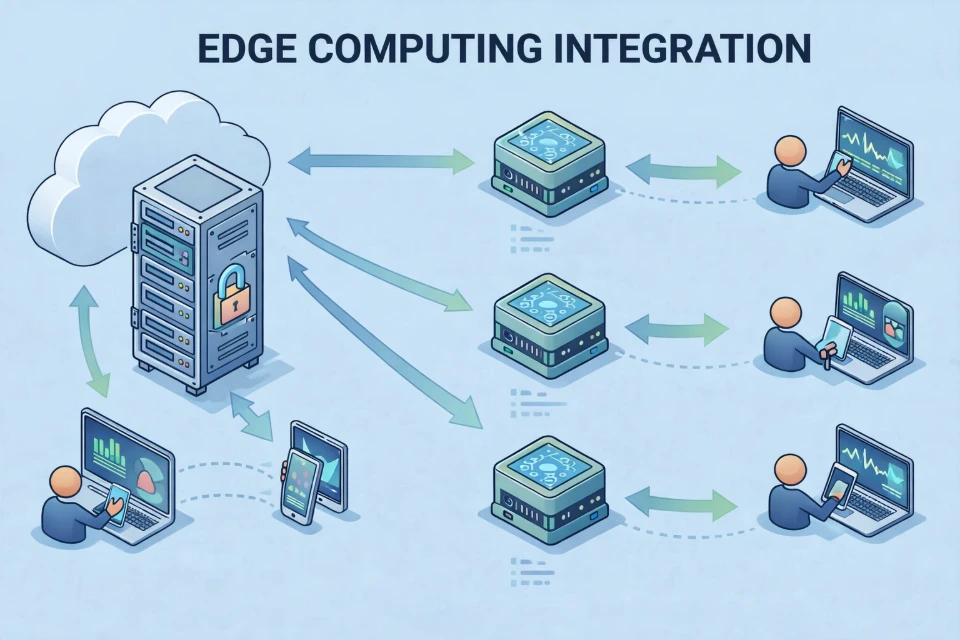
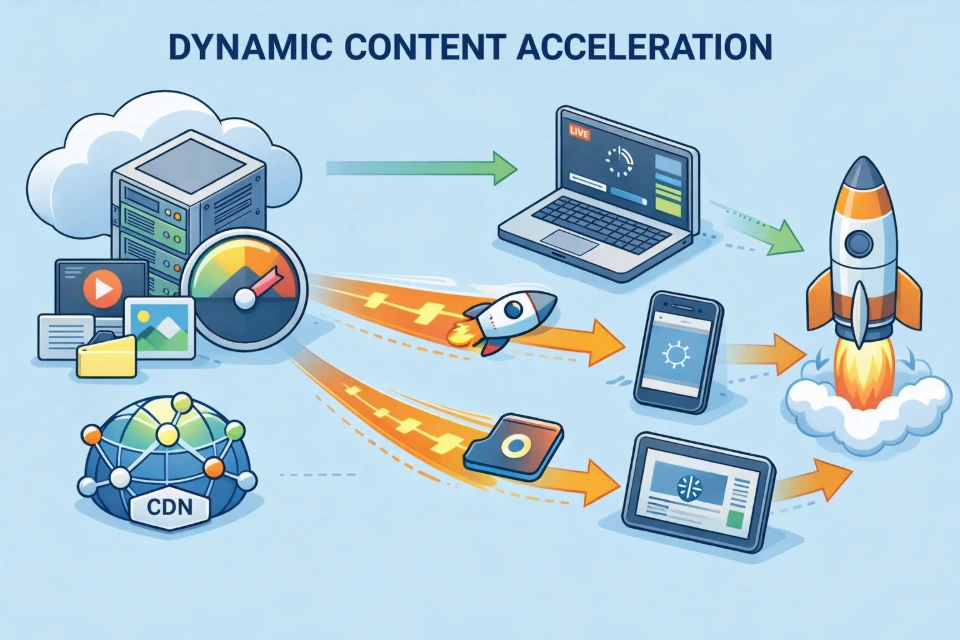
Dynamic Content Acceleration
Enhancing performance beyond static file delivery
While CDNs are traditionally known for caching static content, modern CDN solutions also optimize the delivery of dynamic content. Techniques such as route optimization, TCP acceleration, and intelligent request handling help speed up server responses.
This ensures that personalized content, API responses, and database-driven pages are delivered quickly and efficiently. As a result, users experience consistent performance even when interacting with complex web applications or real-time services.
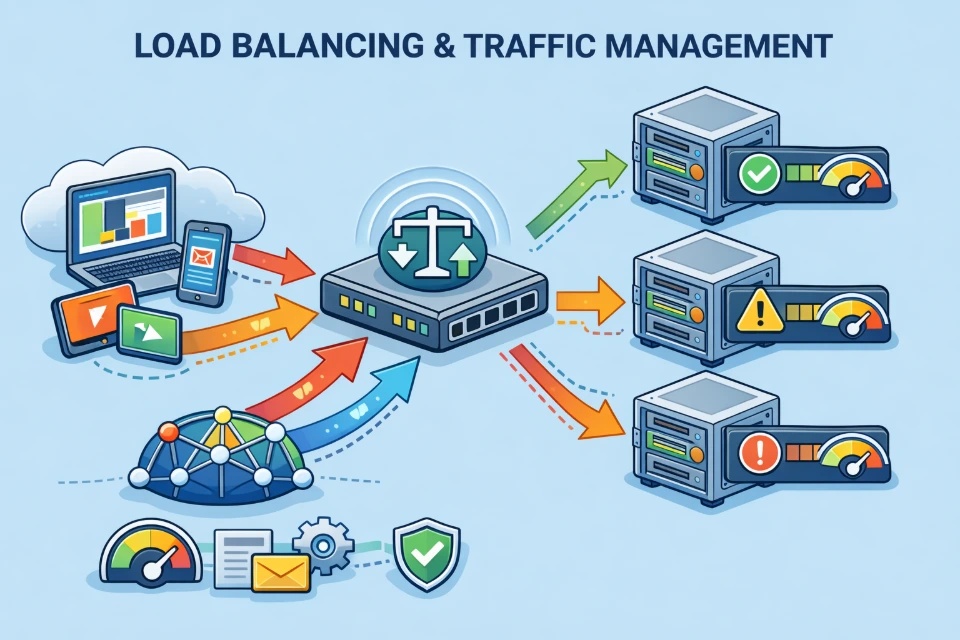
Load Balancing & Traffic Management
Distributing traffic intelligently across servers
CDNs incorporate advanced load balancing techniques to manage incoming traffic across multiple servers. This prevents any single server from becoming overwhelmed and ensures stable performance during traffic spikes.
Traffic is automatically routed based on server health, location, and availability, which enhances reliability and uptime. This intelligent distribution is especially critical for high-traffic websites, ensuring smooth performance during peak periods and global access demands.
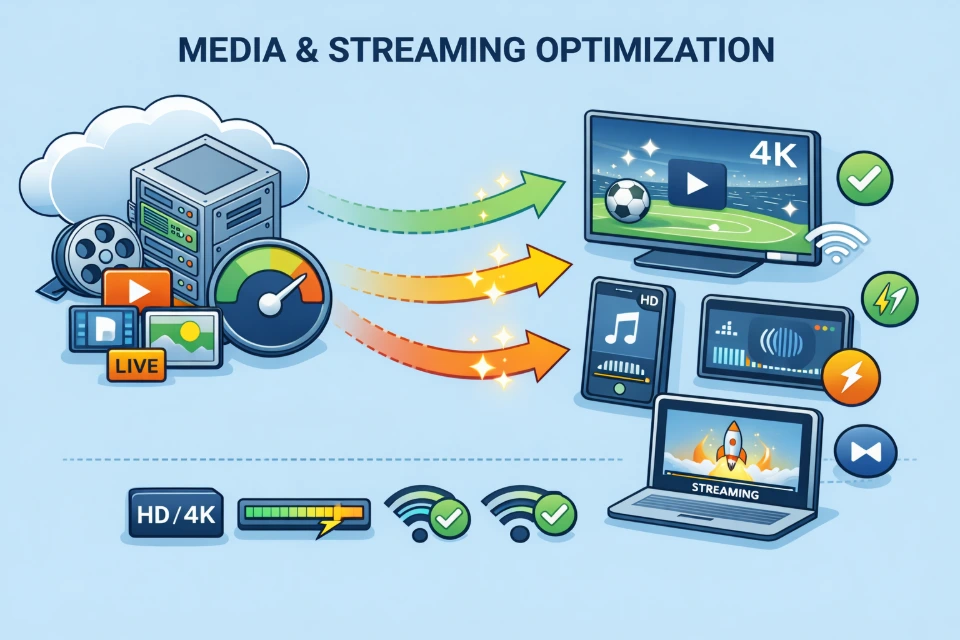
Media & Streaming Optimization
Delivering high-quality media with minimal buffering
CDNs play a crucial role in optimizing media delivery, including video, audio, and large image files. They use adaptive bitrate streaming and efficient compression techniques to ensure smooth playback across different devices and network conditions.
This is particularly important for platforms that rely on streaming services, online courses, or digital media libraries. By reducing buffering and improving playback quality, CDNs enhance user engagement and satisfaction.
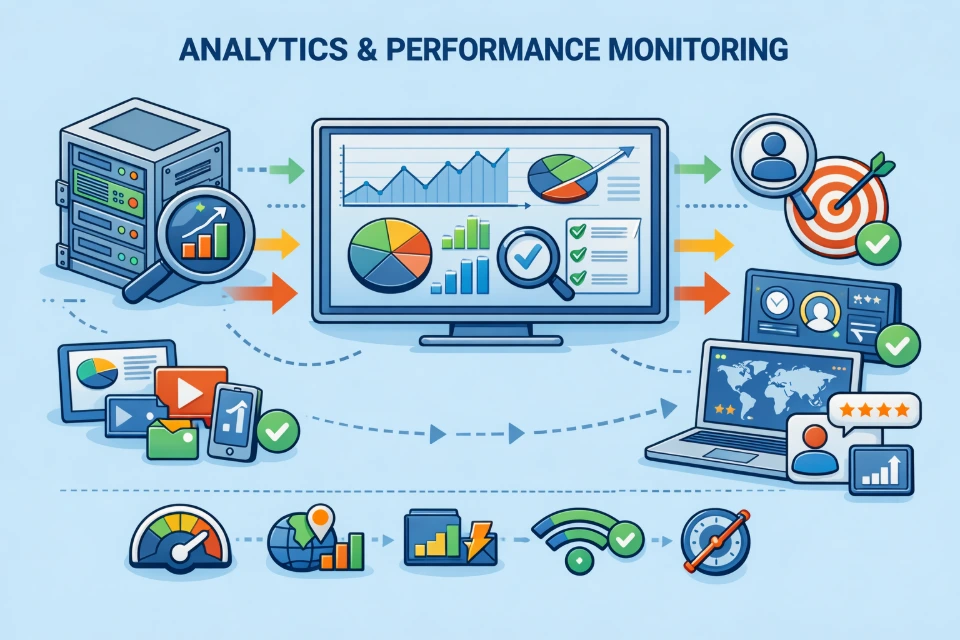
Analytics & Performance Monitoring
Gaining insights into content delivery and user behavior
Modern CDN platforms provide detailed analytics and real-time performance monitoring tools. These insights help businesses understand traffic patterns, user locations, content performance, and potential bottlenecks.
With this data, organizations can make informed decisions to optimize content delivery strategies, improve infrastructure, and enhance overall website performance. Continuous monitoring ensures that systems remain efficient, secure, and aligned with user expectations.
What We Can Do For You
We ensure your website stays online with redundant systems and automatic failover mechanisms.
We minimize service interruptions by distributing traffic across multiple servers for reliability.
We protect your platform from attacks using advanced CDN-based security and traffic filtering.
We implement firewalls, secure data transmission, and monitoring to safeguard your web applications.
We deliver your content efficiently worldwide, ensuring fast access for users in any location.
We deploy CDN solutions that automatically scale to handle growing traffic and global demand.

Let's Connect Today!
My Company
- Garhoud Views Building – 7th Floor -Office 711-01 Dubai UAE
- +971509862203
- +971509862239
- info@itdtech.ae