
Pillars of Next-Gen Web Innovation
Transforming digital experiences with emerging technologies, seamless performance, and intelligent design for future-ready platforms.
Immersive Interactive Design
Create highly engaging, visually rich interfaces with dynamic animations, micro-interactions, and immersive storytelling. Enhances user engagement and long-term retention.
AI-Powered Optimization
Use machine learning to analyze user behavior, personalize content, and optimize workflows automatically. Drives smarter decisions and more efficient digital operations.
Sustainable Web Practices
Develop eco-friendly web platforms with optimized code, energy-efficient hosting, and minimal resource usage. Supports corporate sustainability goals while maintaining high performance.
Things To Know About

Modern Web Development تطوير الويب الحديث
Build platforms with modern technologies. بناء منصات باستخدام أحدث التقنيات

High Performance أداء عالي
Deliver fast and efficient experiences. تقديم تجارب سريعة وفعالة

AI Integration دمج الذكاء الاصطناعي
Enhance systems with AI capabilities. تعزيز الأنظمة باستخدام الذكاء الاصطناعي

Smart Chatbots الدردشة الذكية
Provide real-time automated support. تقديم دعم آلي فوري

Predictive Analytics التحليلات التنبؤية
Anticipate trends using data insights. توقع الاتجاهات باستخدام بيانات التحليل

Scalable Innovation الابتكار القابل للتوسع
Build flexible and future-ready systems. بناء أنظمة مرنة وجاهزة للمستقبل
Modern Web Development تطوير الويب الحديث
Build platforms with modern technologies. بناء منصات باستخدام أحدث التقنيات
High Performance أداء عالي
Deliver fast and efficient experiences. تقديم تجارب سريعة وفعالة
AI Integration دمج الذكاء الاصطناعي
Enhance systems with AI capabilities. تعزيز الأنظمة باستخدام الذكاء الاصطناعي
Smart Chatbots الدردشة الذكية
Provide real-time automated support. تقديم دعم آلي فوري
Predictive Analytics التحليلات التنبؤية
Anticipate trends using data insights. توقع الاتجاهات باستخدام بيانات التحليل
Scalable Innovation الابتكار القابل للتوسع
Build flexible and future-ready systems. بناء أنظمة مرنة وجاهزة للمستقبل
Transitioning from Rigid Navigation to Adaptive AI Experiences
Moving toward interfaces that predict intent and execute tasks autonomously
The future of web development is shifting from "static" pages to "agentic" interfaces. Instead of users navigating complex menus to find information, AI-native portals will utilize large language models (LLMs) to understand intent and adapt the UI in real-time. These systems act as intelligent agents that can generate custom dashboards, fill out complex forms, and provide technical support through a natural conversational layer, making the digital experience feel more like a human interaction than a software transaction.
Key Areas Include:
Generative UI Components: Elements that change layout based on the user's current task.
Conversational Navigation: Using natural language as the primary "search and find" tool.
Intent Prediction: Surfacing the most relevant tools before the user even clicks.
LLM Backend Integration: Directly linking the web interface to autonomous AI reasoning.
Context-Aware Personalization: Real-time adaptation based on browsing history and behavior.
Distributing Logic to the Network Fringe for Instant Performance
Reducing latency by moving backend execution closer to the end-user
As global connectivity demands grow, web development is moving away from centralized servers toward "Edge Computing." By deploying serverless functions at the network's edge, applications can execute logic—such as authentication, image optimization, and data filtering—within milliseconds of the user's location. This "Serverless 2.0" approach eliminates the traditional "round-trip" delay to a distant data center, ensuring that complex web applications perform with the speed of a local desktop program.
Key Areas Include:
Edge Functions: Running backend code on globally distributed CDN nodes.
Distributed Databases: Syncing data across the globe for sub-second read/write speeds.
Static Site Generation (SSG): Pre-rendering pages for instant delivery via the Edge.
Global Load Balancing: Automatically routing traffic to the healthiest, closest server.
Cold-Start Elimination: New architectures that ensure instant "wake up" for serverless code.

Running High-Performance Applications Directly in the Web Browser
Bringing the speed of C++, Rust, and C# to web-based ecosystems
WebAssembly (Wasm) is revolutionizing what is possible in a web browser by allowing high-performance, low-level languages to run alongside JavaScript. This enables complex applications—such as professional video editors, 3D design tools (CAD), and high-fidelity gaming—to run natively in the browser without requiring a download or installation. For enterprise platforms, Wasm means the ability to port heavy legacy software to the web while maintaining 100% of the original desktop speed and security.
Key Areas Include:
Near-Native Execution Speed: Running code at speeds almost identical to desktop apps.
Language Portability: Compiling C#, Rust, and C++ directly for web deployment.
Heavy Compute Tasks: Handling 3D rendering and complex physics in the browser.
Secure Sandboxing: Ensuring high-performance code runs safely within the browser.
Module Interoperability: Seamlessly mixing Wasm modules with existing JavaScript frameworks.

Integrating Augmented and Virtual Reality into the Standard Web
Transforming 2D websites into immersive, three-dimensional environments
With the rise of "Spatial Computing," web development is expanding into the third dimension. WebXR (Extended Reality) allows developers to build AR and VR experiences that run directly in a browser—no specialized apps required. This technology is transforming industries like Real Estate and E-Commerce, enabling users to "walk through" a virtual property or "place" a 3D model of a product in their living room using their smartphone camera, all through a standard web URL.
Key Areas Include:
Browser-Based VR/AR: Creating immersive worlds without requiring app store downloads.
3D Product Interaction: Allowing users to rotate and inspect items in full 3D.
Spatial Navigation: Moving through digital spaces using physical movement or gestures.
Web-Based Digital Twins: Visualizing real-time IoT data in a 3D building model.
Cross-Device XR Compatibility: Ensuring 3D content works on phones, tablets, and headsets.

Building Resilient Systems through Continuous Verification Transitioning to security models that assume no user or system is safe by default
In an era of increasing digital threats, the future of web development is rooted in "Zero-Trust" architecture. This approach moves away from traditional "perimeter" security toward a model where every request—whether internal or external—must be continuously verified and encrypted. Privacy-first development also focuses on "Data Minimization" and decentralized identity, ensuring that user privacy is baked into the technical foundation of the application rather than added as a secondary feature.
Key Areas Include:
Passwordless Authentication: Utilizing biometrics and passkeys for secure access.
End-to-End Encryption (E2EE): Ensuring data is unreadable to anyone except the sender and receiver.
Micro-Segmentation: Isolating different parts of an application to prevent breach spread.
Decentralized Identity: Giving users total control over their personal data and credentials.
Automated Security Auditing: Using AI to scan code for vulnerabilities in real-time.

Localized Performance
الأداء المحلي
Edge Computing & Faster Delivery
حوسبة الحافة والتسليم الأسرع
Sub-Millisecond Latency
زمن انتقال أقل من ميلي ثانية
Eliminate the round-trip journey to central servers. Move data processing to the network periphery—closer to your users—ensuring interactive elements and high-res media feel instantaneous.
ألغِ رحلة الذهاب والإياب إلى الخوادم المركزية. انقل معالجة البيانات إلى محيط الشبكة - أقرب إلى المستخدمين - مما يضمن أن العناصر التفاعلية والوسائط عالية الدقة تبدو فورية.
Intelligent Bandwidth Partitioning
تقسيم النطاق الترددي الذكي
Filter and process raw data locally—like IoT feeds or API requests. Transmit only critical insights to the cloud, significantly reducing network congestion and data transmission costs.
قم بتصفية ومعالجة البيانات الأولية محليًا - مثل تغذيات إنترنت الأشياء أو طلبات واجهة برمجة التطبيقات. انقل الرؤى الهامة فقط إلى السحابة، مما يقلل بشكل كبير من ازدحام الشبكة وتكاليف نقل البيانات.
Decentralized Operational Resilience
المرونة التشغيلية اللامركزية
Ensure 24/7 operation for mission-critical applications. Edge nodes maintain essential services even during central connectivity disruptions, creating a high-performance, resilient ecosystem.
تأكد من تشغيل التطبيقات ذات المهمة الحرجة على مدار الساعة طوال أيام الأسبوع. تحافظ عُقد الحافة على الخدمات الأساسية حتى أثناء انقطاع الاتصال المركزي، مما يخلق نظامًا بيئيًا عالي الأداء ومرنًا.
Localized Performance
الأداء المحلي
Edge Computing & Faster Delivery
حوسبة الحافة والتسليم الأسرع
Sub-Millisecond Latency
زمن انتقال أقل من ميلي ثانية
Eliminate the round-trip journey to central servers. Move data processing to the network periphery—closer to your users—ensuring interactive elements and high-res media feel instantaneous.
ألغِ رحلة الذهاب والإياب إلى الخوادم المركزية. انقل معالجة البيانات إلى محيط الشبكة - أقرب إلى المستخدمين - مما يضمن أن العناصر التفاعلية والوسائط عالية الدقة تبدو فورية.
Intelligent Bandwidth Partitioning
تقسيم النطاق الترددي الذكي
Filter and process raw data locally—like IoT feeds or API requests. Transmit only critical insights to the cloud, significantly reducing network congestion and data transmission costs.
قم بتصفية ومعالجة البيانات الأولية محليًا - مثل تغذيات إنترنت الأشياء أو طلبات واجهة برمجة التطبيقات. انقل الرؤى الهامة فقط إلى السحابة، مما يقلل بشكل كبير من ازدحام الشبكة وتكاليف نقل البيانات.
Decentralized Operational Resilience
المرونة التشغيلية اللامركزية
Ensure 24/7 operation for mission-critical applications. Edge nodes maintain essential services even during central connectivity disruptions, creating a high-performance, resilient ecosystem.
تأكد من تشغيل التطبيقات ذات المهمة الحرجة على مدار الساعة طوال أيام الأسبوع. تحافظ عُقد الحافة على الخدمات الأساسية حتى أثناء انقطاع الاتصال المركزي، مما يخلق نظامًا بيئيًا عالي الأداء ومرنًا.
Next-Gen Interaction
جيل المستقبل من التفاعل
Shaping the Future of Digital Experiences
صياغة مستقبل التجارب الرقمية
Proactive Agentic Interfaces
واجهات وكيلة استباقية
Move beyond static consumption toward intelligent systems that act as proactive partners. Merge Generative AI and spatial computing to create ecosystems that adapt to human intent in real-time.
تجاوز الاستهلاك الثابت نحو أنظمة ذكية تعمل كشركاء استباقيين. ادمج الذكاء الاصطناعي التوليدي والحوسبة المكانية لإنشاء أنظمة بيئية تتكيف مع نية الإنسان في الوقت الفعلي.
Hyper-Personalization & Frictionless Value
التخصيص الفائق والقيمة السلسة
Deliver value at the exact moment it's required through seamless touchpoints. Whether in government portals or e-commerce, build digital realities where technology enhances connections without friction.
قدم القيمة في اللحظة التي تطلب فيها بالضبط من خلال نقاط اتصال سلسة. سواء في البوابات الحكومية أو التجارة الإلكترونية، ابنِ واقعاً رقمياً تعزز فيه التكنولوجيا الروابط دون عوائق.
Rigorous Trust & Privacy
ثقة وخصوصية صارمة
Successful platforms prioritize transparency and data integrity. Create meaningful connections by ensuring a rigorous commitment to privacy, letting the technology fade into the background.
تعطي المنصات الناجحة الأولوية للشفافية ونزاهة البيانات. أنشئ روابط ذات مغنى من خلال ضمان التزام صارم بالخصوصية، مما يسمح للتكنولوجيا بالتلاشي في الخلفية.
Next-Gen Interaction
جيل المستقبل من التفاعل
Shaping the Future of Digital Experiences
صياغة مستقبل التجارب الرقمية
Proactive Agentic Interfaces
واجهات وكيلة استباقية
Move beyond static consumption toward intelligent systems that act as proactive partners. Merge Generative AI and spatial computing to create ecosystems that adapt to human intent in real-time.
تجاوز الاستهلاك الثابت نحو أنظمة ذكية تعمل كشركاء استباقيين. ادمج الذكاء الاصطناعي التوليدي والحوسبة المكانية لإنشاء أنظمة بيئية تتكيف مع نية الإنسان في الوقت الفعلي.
Hyper-Personalization & Frictionless Value
التخصيص الفائق والقيمة السلسة
Deliver value at the exact moment it's required through seamless touchpoints. Whether in government portals or e-commerce, build digital realities where technology enhances connections without friction.
قدم القيمة في اللحظة التي تطلب فيها بالضبط من خلال نقاط اتصال سلسة. سواء في البوابات الحكومية أو التجارة الإلكترونية، ابنِ واقعاً رقمياً تعزز فيه التكنولوجيا الروابط دون عوائق.
Rigorous Trust & Privacy
ثقة وخصوصية صارمة
Successful platforms prioritize transparency and data integrity. Create meaningful connections by ensuring a rigorous commitment to privacy, letting the technology fade into the background.
تعطي المنصات الناجحة الأولوية للشفافية ونزاهة البيانات. أنشئ روابط ذات مغنى من خلال ضمان التزام صارم بالخصوصية، مما يسمح للتكنولوجيا بالتلاشي في الخلفية.
What We Can Do For You
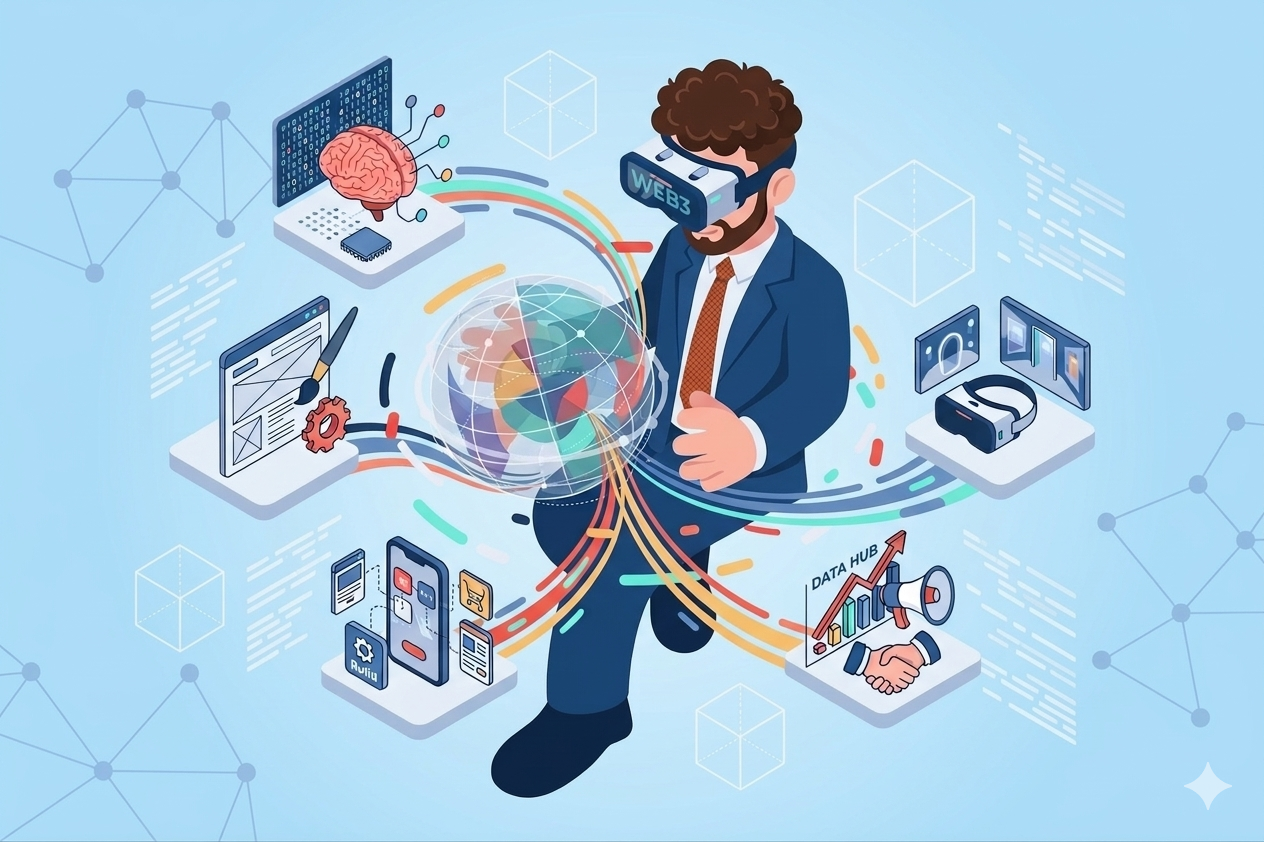
We specialize in integrating LLMs and agentic AI directly into your web architecture, moving your business from static portals to intelligent, adaptive digital ecosystems.
Our team architects global-first applications that leverage edge computing to ensure your services load instantly for users in any region, from Dubai to New York.
We help you bring your mission-critical desktop software to the web using WebAssembly, maintaining native-level performance and security within a standard browser environment.
We design and develop 3D, AR, and VR experiences that run natively on the web, providing your customers with immersive "try-before-you-buy" and virtual walkthrough capabilities.
We implement the latest in privacy-first development, from passwordless authentication to end-to-end encrypted data pipelines, ensuring your institutional data remains impenetrable.
We conduct deep-tier reviews of your current tech stack to identify modernization opportunities, providing a strategic roadmap to adopt next-generation web standards.
Let's Connect Today!
My Company
- Garhoud Views Building – 7th Floor -Office 711-01 Dubai UAE
- +971509862203
- +971509862239
- info@itdtech.ae